
How Should Buyers Compare a tpms valve tpms sensor valve stem?
A tpms valve tpms sensor valve stem should be evaluated by verified product identity, material, application evidence, and the target service process before purchase.
Start With the Product Evidence Buyers Can Verify
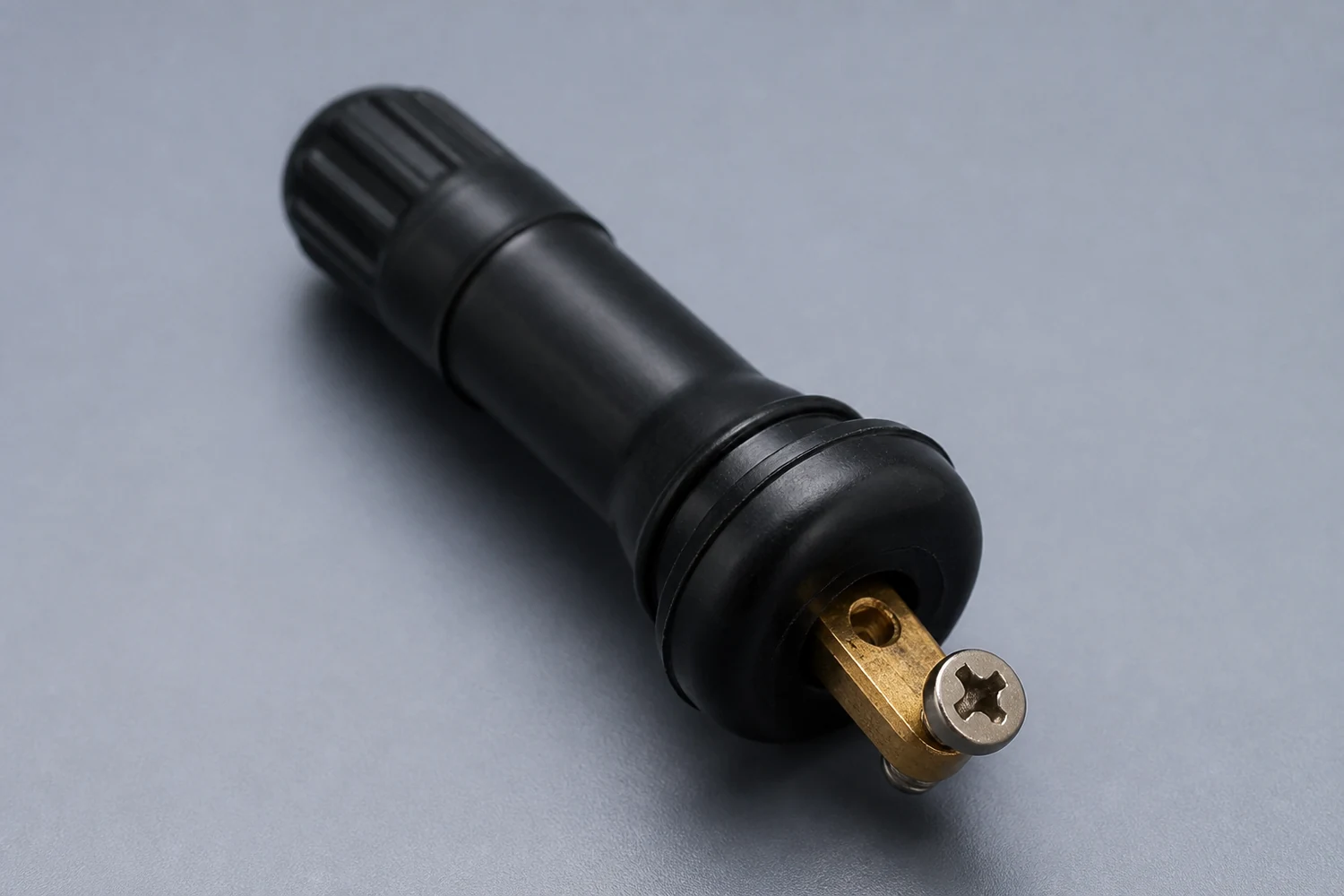
The selected product page identifies the item as TPMS Valve 03 and describes it as a snap-in tubeless tire valve. It also declares a rubber body with a brass stem. These are the dependable starting fields for a buyer comparison because they describe the item itself without extending into unverified dimensions, pressure ratings, sensor protocols, or installation claims.
The page lists applications that include Buick, Cadillac, Chevrolet, Malibu, Mondeo, Volvo, JAC, GMC, Ford Raptor, Geely Boyue, and market installation. That list is useful as a screening signal, but it is not a universal fitment guarantee. Model year, wheel design, sensor body, mounting interface, and service procedure may still differ within a vehicle nameplate.
A practical evidence hierarchy
Procurement teams can treat the model, type, material, and listed application as four separate evidence fields. Each field should be checked against the intended sensor and wheel documentation. If a requested numeric specification is absent from the product page, it should be obtained and documented before approval rather than estimated from a similar-looking valve.
- Identify: record TPMS Valve 03 as the selected model.
- Classify: confirm that a snap-in tubeless tire valve is required.
- Match: compare the rubber and brass-stem construction with the target sensor interface.
- Document: connect the chosen valve, sensor, vehicle, wheel, and work instruction in one approval record.
Translate Specifications Into a Procurement Decision
A specification is valuable only when it changes a purchasing or service decision. For this item, the declared type helps buyers separate snap-in requirements from other valve structures. The declared material helps receiving teams create a visual and bill-of-material check. The model provides the traceable identifier that should appear on quotes, samples, packing records, and internal approval notes.
| Decision factor | Verified evidence | Buyer implication |
|---|---|---|
| Model | TPMS Valve 03 | Use one identifier across sample, quote, order, and receiving records. |
| Type | Snap-in tubeless tire valve | Confirm that the target sensor and wheel call for this valve structure. |
| Material | Rubber and brass stem | Build visual inspection around the declared construction. |
| Application evidence | Named vehicles and market installation | Treat the list as a screening input and complete a vehicle-specific check. |
Do not fill missing fields by analogy
A visually similar valve can still differ in the sensor attachment, rubber profile, stem form, or other application-critical details. Buyers should request the exact drawing, approved application reference, sample result, or service instruction needed for their decision. This prevents a catalog shortcut from becoming a workshop problem.
Check Fitment Across the Complete Service System
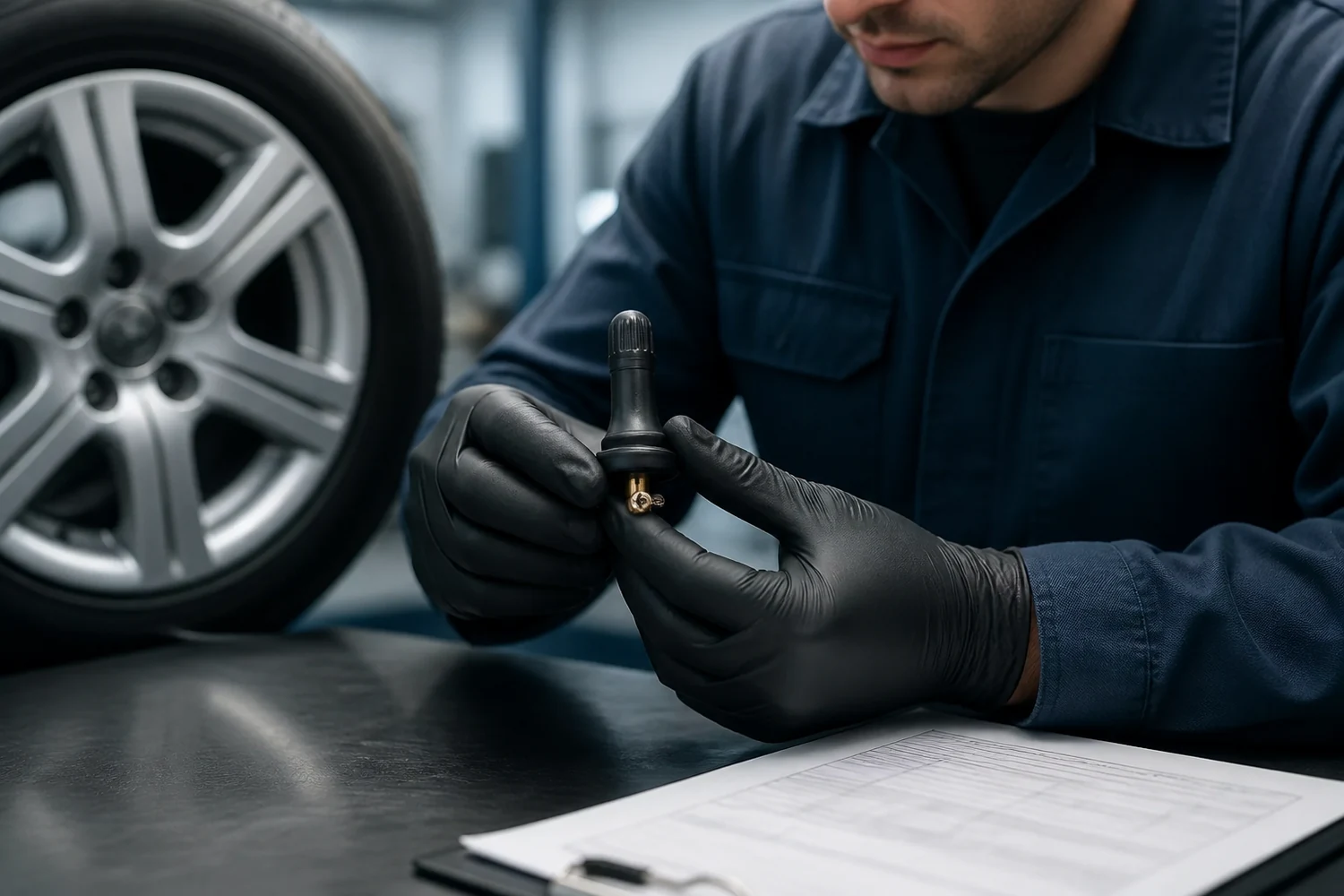
The second review layer connects the valve to the full service system. The target sensor body, wheel opening, tire-service equipment, vehicle procedure, and post-service TPMS checks all matter. A tpms valve tpms sensor valve stem cannot be approved reliably from a vehicle name alone, especially when one nameplate spans several years, markets, or sensor configurations.
Separate application screening from final fitment
The product page supports initial review for the listed vehicles. Final approval should compare the actual sensor and wheel documentation. A sample can then be checked for attachment, seating, clearance, and service compatibility by trained personnel using the appropriate procedure. When any field conflicts, the part should remain quarantined until the difference is resolved.
Keep the intended service context visible
For passenger vehicle service, the receiving record should connect each sample to the target vehicle and wheel. If a buyer is also considering commercial vehicle service or motorcycle service, that decision requires separate evidence; those phrases describe broader evaluation contexts and are not declared applications for this selected product. Mixing contexts can hide important differences in wheels, loads, procedures, and sensor systems.
Build a Controlled Workshop and Receiving Workflow
A controlled workflow makes the purchasing decision auditable. It begins before the tire is disturbed, continues through valve and sensor handling, and ends with leak and TPMS-function checks defined by the applicable documentation. General industry guidance also emphasizes protecting sensor-mounted valves from tire-changing equipment and replacing service components according to the relevant system instructions.
Use one record from receiving to installation
- Receive: verify model, quantity, package condition, and visible valve construction.
- Approve: match the sample to the sensor, wheel, vehicle, and service instruction.
- Install: use trained personnel, suitable tools, and the specified procedure without substituting guessed settings.
- Verify: complete the required seating, leak, warning-light, and relearn checks for the vehicle and sensor system.
- Release: retain the batch, sample, inspection, and result record for traceability.
Wheel balancing may be part of the same tire-service visit, but balance quality does not prove valve or TPMS compatibility. The valve decision and the balancing result should therefore be recorded as related but separate checks.
Plan Distributor and Workshop Inventory Carefully
Distributors gain more control when inventory is organized by verified application evidence rather than by appearance. A useful stock record links supplier model, product type, declared material, target sensor family, approved vehicle reference, batch, and inspection status. This structure makes it easier to isolate a mismatch without freezing unrelated stock.
Before a larger order, buyers can request a representative sample and define objective acceptance fields. The sample review should reproduce the intended receiving and workshop checks. Packaging quantities, labeling, private-label requirements, and replenishment cadence should be discussed separately because they are commercial requirements, not proof of technical compatibility.
A distributor can also separate provisional records from approved records. Provisional stock remains linked to the evidence still under review, while approved stock carries the exact application and inspection result that released it. This distinction is especially useful when several workshops share one warehouse. It allows the purchasing team to answer which valve was evaluated, for which sensor and wheel, by which procedure, and with what result. If a supplier changes a material, profile, attachment detail, package identifier, or drawing revision, the record can trigger a new sample review instead of silently treating the change as equivalent. Clear change control protects both inventory accuracy and workshop consistency.
Create a decision-ready inquiry
A focused inquiry names TPMS Valve 03, the intended vehicle and wheel, the sensor reference, the required quantity, and the evidence still needed for approval. This gives both buyer and supplier a precise checklist. It also keeps the tpms valve tpms sensor valve stem evaluation at the correct buyer stage: evidence review first, purchasing decision second.
Frequently Asked Questions
What is verified for TPMS Valve 03?
The product page verifies the model, snap-in tubeless tire valve type, rubber and brass-stem material, and its listed vehicle applications. It does not publish every dimension or service setting a buyer may require.
Does the vehicle list guarantee fitment?
No. It is an application-screening list. Final fitment should be confirmed against the exact vehicle, wheel, sensor body, mounting interface, and service documentation.
What should a receiving inspection record?
Record the model, shipment or batch reference, quantity, package condition, visible rubber and brass-stem construction, sample result, and the approval status for the intended application.
Can a similar-looking valve be substituted?
Appearance alone is insufficient. The attachment, profile, sensor interface, wheel compatibility, and installation procedure must match the controlled application evidence.
What should buyers send with an inquiry?
Send the target vehicle and market, wheel and sensor reference, expected quantity, sample requirement, and any document or packaging fields needed for internal approval.
Discuss Your Supply Requirements
Review the verified TPMS Valve 03 product page, then share the target vehicle, wheel, sensor reference, and quantity needed for a focused evaluation discussion.