

How Should Buyers Evaluate a TPMS sensor for VW Passat?
A TPMS sensor for VW Passat should be evaluated by item number, 433 MHz frequency, listed vehicle application, physical condition, and service procedure.
Begin With the Verified Identification Fields
The selected product is identified as a TPMS Sensor with item number 5Q0907275B. Its declared material is aluminum alloy, and its declared operating frequency is 433 MHz. The application list names VW Passat, Magotan, and Passat CC. These fields provide a useful screening record, but they should be read together because a matching frequency alone does not establish the complete fitment or service path.
A distributor or workshop can treat the item number as the primary receiving key, then connect it to the declared frequency and application list. That method reduces the risk of selecting a sensor by shape alone. It also creates a traceable handoff from purchasing to inventory and from inventory to the technician performing the installation.
Keep application language precise
The page lists three vehicle names, not model years, trim levels, regions, or software variants. Buyers should therefore confirm the exact vehicle configuration in authoritative vehicle documentation before approval. This protects the application record from becoming broader than the published evidence and gives technicians a clear reason to stop when a vehicle falls outside the confirmed scope.
A practical application file can include the source-page date, the vehicle information used for confirmation, the person who performed the check, and the approved stock code. If a later catalog or service update changes the decision, the file can be revised without altering historical receiving records. This approach makes the selection process auditable across purchasing, warehouse, and workshop teams.
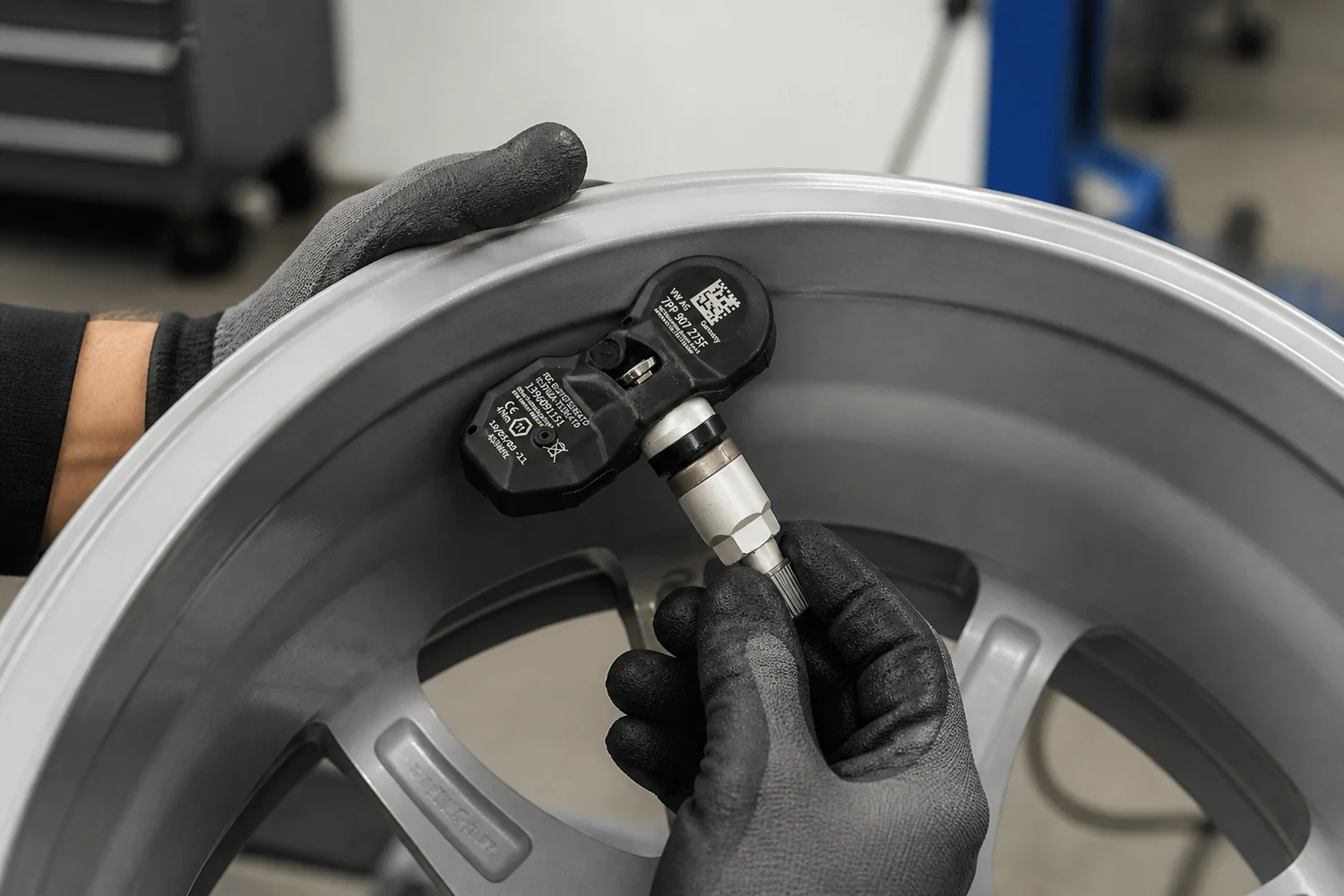
Understand What the Frequency Does and Does Not Prove
A declared 433 MHz frequency is a technical selection field, not a complete compatibility statement. TPMS systems can differ in architecture, identification, communication, installation, and vehicle-side procedures. The buyer should confirm the sensor type, applicable vehicle system, any registration or relearn step, and the workshop equipment required for the target vehicle before stock is released for use.
Separate sensor selection from tire maintenance
General regulator guidance describes direct systems that collect data from sensors located at the tires and indirect systems that use wheel-speed or other vehicle information. It also emphasizes that TPMS does not replace routine pressure checks and tire inspection. For passenger vehicle service, this means sensor work belongs inside a larger tire-maintenance process rather than functioning as an isolated electronic repair.
- Verify the vehicle: record the model, configuration, region, and relevant service information.
- Match the product: check item number, frequency, declared application, and physical identity.
- Plan the procedure: identify installation, identification, registration, or relearn requirements before work starts.
- Verify the outcome: complete the vehicle-specific post-service checks and document the result.
Inspect the Product Before Workshop Release
The product page declares aluminum-alloy material. A receiving inspection can therefore compare each unit with the approved reference for housing shape, valve geometry, finish, fastening condition, and visible part identification without inventing a performance claim. Any deformation, surface damage, missing component, or inconsistent marking should be isolated for review before the part reaches a service bay.
Use a repeatable inspection record
The record can capture supplier, item number, receipt date, quantity, application label, frequency, visual condition, and disposition. When a shengshiweiye tpms sensor is handled through a consistent receiving process, buyers gain a clearer connection between purchase documentation and workshop stock. The record should stay factual and avoid treating visual similarity as proof of electronic compatibility.
Sampling frequency for incoming inspection should reflect the buyer's own quality plan and risk assessment. The approved reference image can help screen obvious physical differences, while any electronic or fitment verification should use appropriate equipment and controlled procedures. Units that do not match the record should be segregated until their identity and condition are resolved.
| Decision factor | Verified evidence | Buyer implication |
|---|---|---|
| Item identity | 5Q0907275B | Use as the primary receiving and inventory reference. |
| Frequency | 433 MHz | Confirm as one field within the complete vehicle-system match. |
| Material | Aluminum alloy | Inspect geometry, finish, and condition against the approved reference. |
| Application | VW Passat, Magotan, Passat CC | Check the exact vehicle configuration and procedure before installation. |
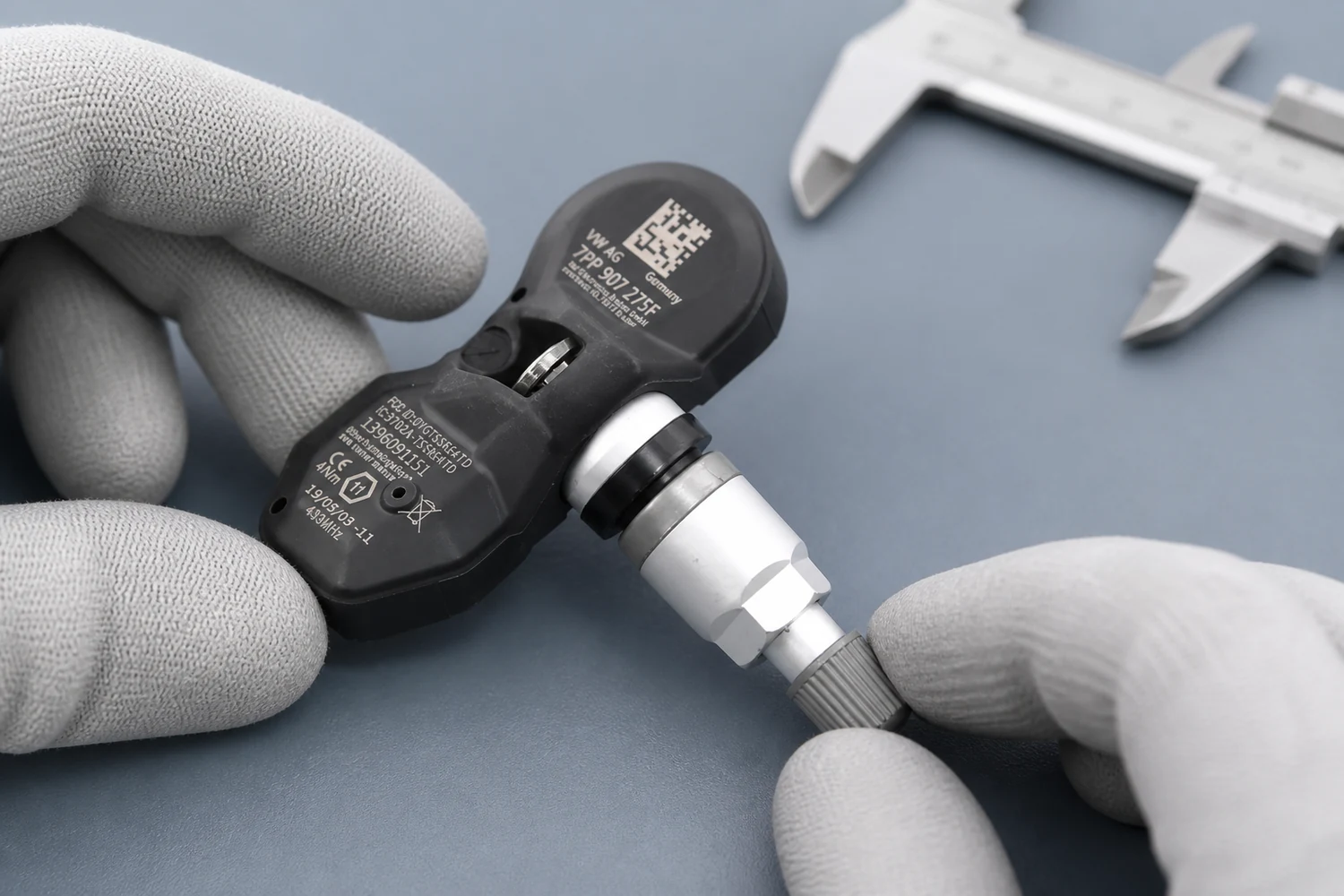
Fit the Sensor Into a Controlled Service Workflow
TPMS service should start with vehicle identification and finish with documented confirmation. Between those points, the technician needs a clean work area, the correct service information, suitable wheel and tire equipment, and a defined method for protecting the sensor during handling. The product page also places this item in tire-shop and workshop supply, making workflow clarity relevant to both procurement and daily operations.
Coordinate adjacent wheel work
Wheel balancing appears among the verified use cases, but it should remain a separate controlled operation. A workshop can schedule sensor work, tire mounting, balancing, and vehicle-side checks in a logical sequence while recording who completed each stage. Clear separation prevents the presence of a new sensor from being treated as evidence that every adjacent wheel-service step was completed correctly.
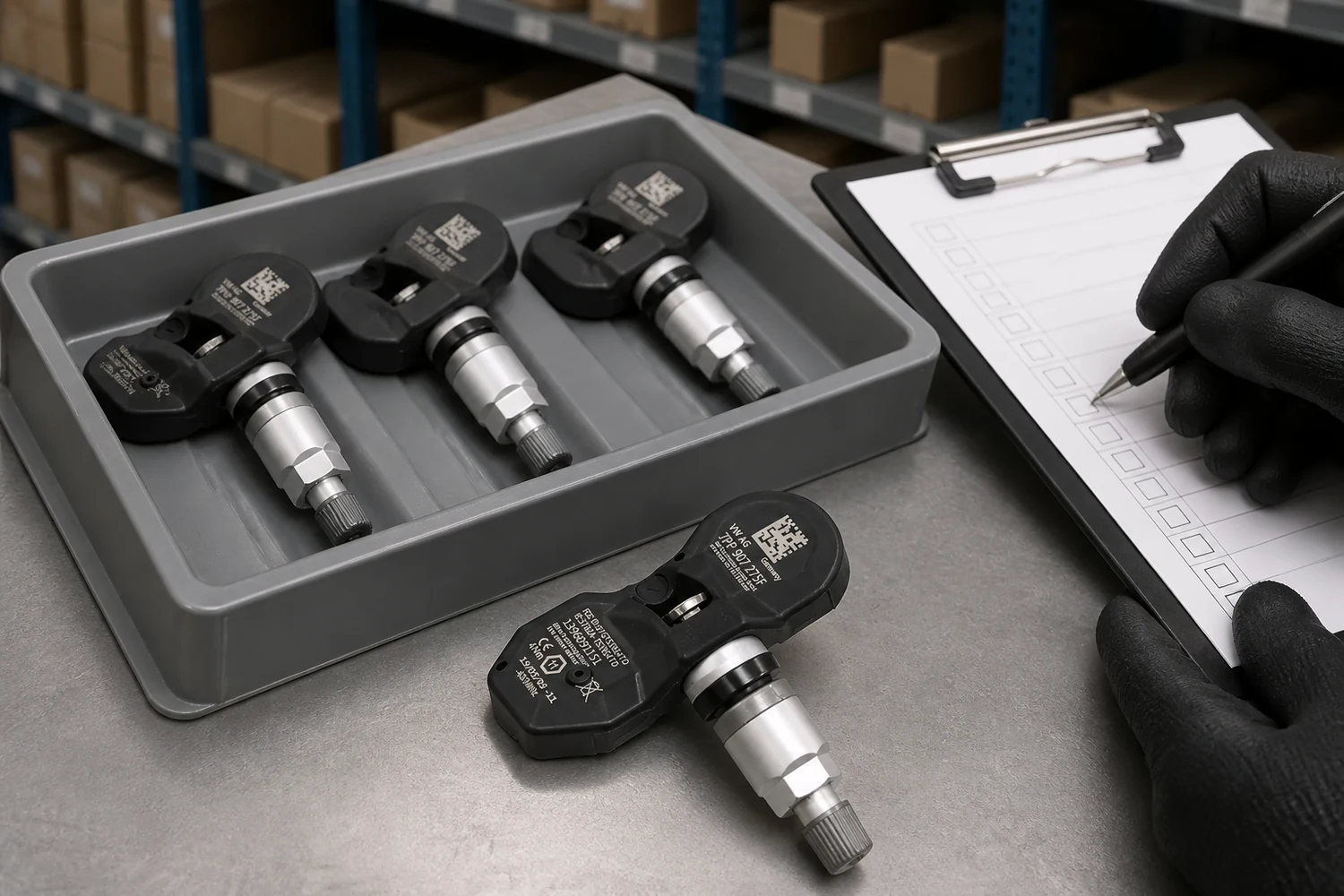
Plan Inventory for Aftermarket Distribution
Automotive aftermarket distribution benefits from application-specific stock records. A buyer can map the TPMS sensor for VW Passat to item 5Q0907275B and the published 433 MHz field, then keep those values visible in purchasing, receiving, shelving, and picking documents. The same record can guide service chains and fleet-service buyers when they reserve stock for confirmed vehicle populations rather than broad labels.
Control substitution and replenishment
A substitution should not be approved only because another sensor looks similar or shares a frequency. Procurement teams should require a separately verified fitment record. Replenishment decisions can then use consumption, confirmed applications, returns, and inspection results while preserving the original item reference. This supports clearer communication among distributors, workshops, and technicians.
Storage locations should prevent mixing between visually similar sensors. Shelving labels, pick lists, and return bins can all use the same item-number convention, with application and frequency displayed as supporting fields. When a unit returns from a workshop, its status should be identified before it re-enters usable inventory. That simple separation protects both stock accuracy and technician confidence.
FAQ for Technical Buyers
What frequency is declared?
The product page declares 433 MHz. Buyers should treat frequency as one compatibility field and confirm the complete vehicle and system requirements before installation.
Which vehicles are listed?
The listed applications are VW Passat, Magotan, and Passat CC. No model years or regional variants are provided in the verified field, so the exact configuration needs separate confirmation.
What material is declared?
The declared material is aluminum alloy. Receiving inspection should compare geometry, finish, and physical condition with the approved reference rather than infer unlisted durability results.
Does the sensor replace routine tire checks?
No. General regulator guidance states that TPMS does not replace proper tire maintenance. Workshops should continue pressure, condition, and service checks according to applicable vehicle and tire guidance.
Who is the product intended to support?
Verified use cases include tire shops, workshops, passenger-vehicle work, service centers, fleet-service buyers, and aftermarket distribution. Each buyer should still confirm the exact target vehicle and process.
Discuss the Application Record
Distributors, tire-service chains, workshops, and fleet-service buyers can prepare the confirmed vehicle list, frequency requirement, receiving criteria, and replenishment plan before discussing the TPMS sensor for VW Passat with SSWYAUTO. A concise inquiry record helps both sides review the same evidence and identify any open compatibility or handling questions.