
Key Selection Checks for a V Brass Truck Tire Valve Stem
A v brass truck tire valve stem should be selected by checking its verified material, clamp-in format, pressure limit, finish, sealing components, and rim fit.
Start With the Verified Product Identity
The selected product is model and standard V3.20.7. Its page identifies brass construction, a heavy-duty metal valve-stem type, and a clamp-in format for tubeless tires. It is intended for tire inflation and pressure maintenance, with a declared working pressure of up to 150 PSI depending on the application. Available finish language covers brass and a nickel-plated option for commercial vehicle service programs.
Those facts form a useful screening record, but they do not replace wheel-level compatibility. The “depending on application” qualifier matters: buyers should match the valve, wheel, tire, service pressure, temperature exposure, extension or equalizer arrangement, and maintenance method. A product name alone does not confirm rim-hole size, installed angle, sealing hardware, or cap suitability for every wheel.
A purchase specification should preserve that distinction. It can identify the selected v brass truck tire valve stem, then add the buyer-controlled interface dimensions, required seals, component list, test conditions, packaging, and traceability fields. This prevents a supplier declaration from being mistaken for a complete engineering approval and gives receiving teams objective features to compare with the sealed sample.
- Model control: keep V3.20.7 consistent across the drawing, sample label, purchase order, carton, and receiving record.
- Material control: verify the brass body and the approved brass or nickel-plated finish on the sample.
- Pressure control: compare the application requirement with the stated upper limit and its application qualifier.
- Interface control: confirm the exact wheel drawing, rim-hole condition, seals, fasteners, valve core, and cap before release.
Translate Specifications Into Selection Questions
What does the pressure statement actually cover?
The page states up to 150 PSI, depending on application. A buyer should document the vehicle manufacturer’s recommended operating pressure, maximum component limits, cold-versus-hot service condition, and any special system connected to the valve. The selected component must be suitable for the complete tire-and-wheel application, not simply below a headline number.
Why does clamp-in construction need a complete review?
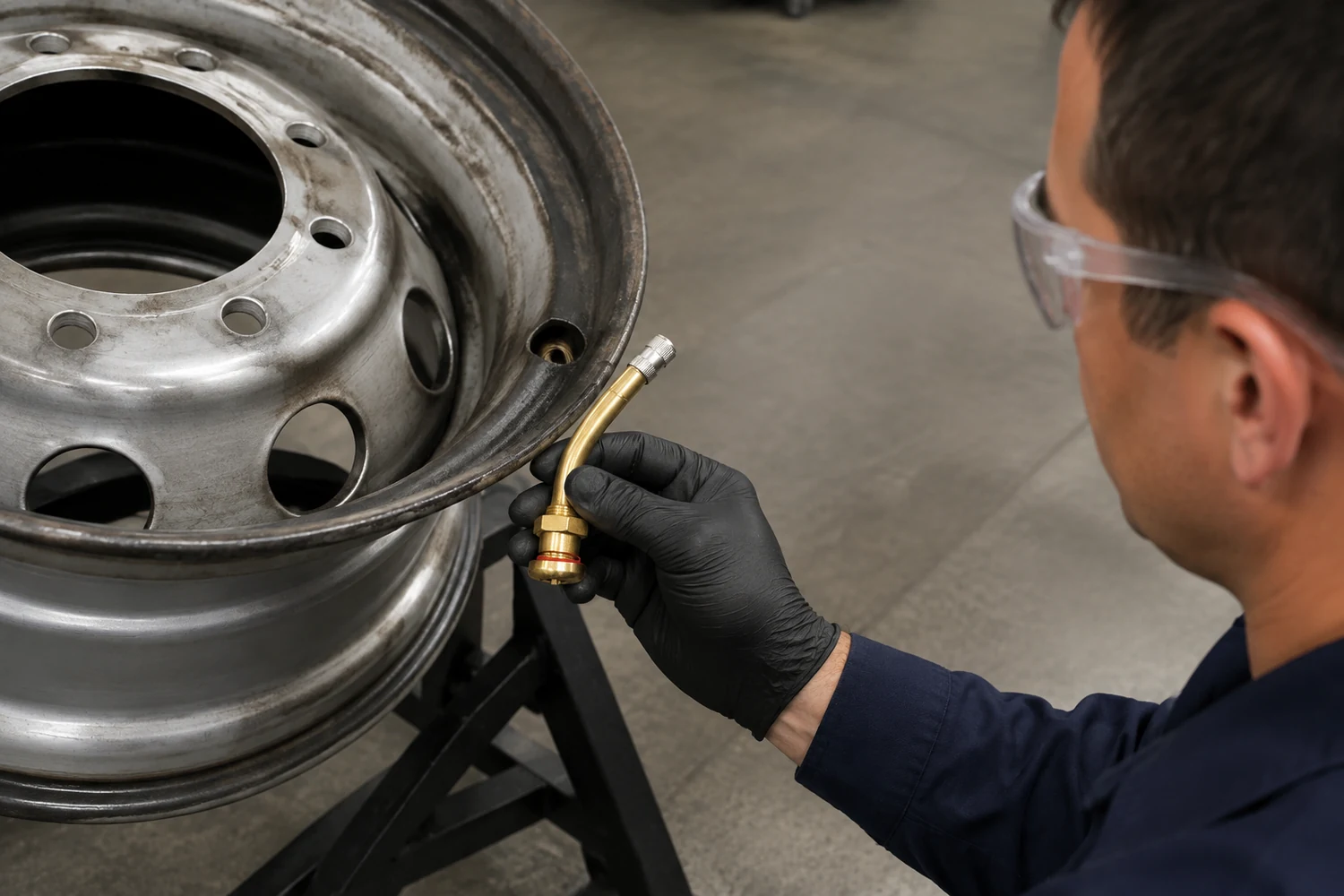
A metal clamp-in valve depends on the interaction of its body, fastening parts, sealing element, rim hole, installed angle, and cap. Industry service guidance emphasizes inspecting the rim hole for nicks, burrs, or corrosion and using the proper valve for the tire-and-wheel application. Buyers should therefore approve the assembly as a system and identify which components are supplied, replaced, or sourced separately.
| Decision factor | Verified evidence | Buyer implication |
|---|---|---|
| Model | V3.20.7 | Use one controlled identifier through sampling, purchasing, and receiving. |
| Material | Brass | Verify body material and surface condition on the approved sample. |
| Format | Heavy-duty metal clamp-in valve for tubeless tires | Confirm rim interface, seals, fastening method, and installed clearance. |
| Pressure | Up to 150 PSI, depending on application | Match the full assembly to the actual service requirement and manufacturer guidance. |
| Finish | Brass or nickel-plated option | State the required finish explicitly and approve its appearance. |
Build a Controlled Sample Review
Inspect geometry before appearance
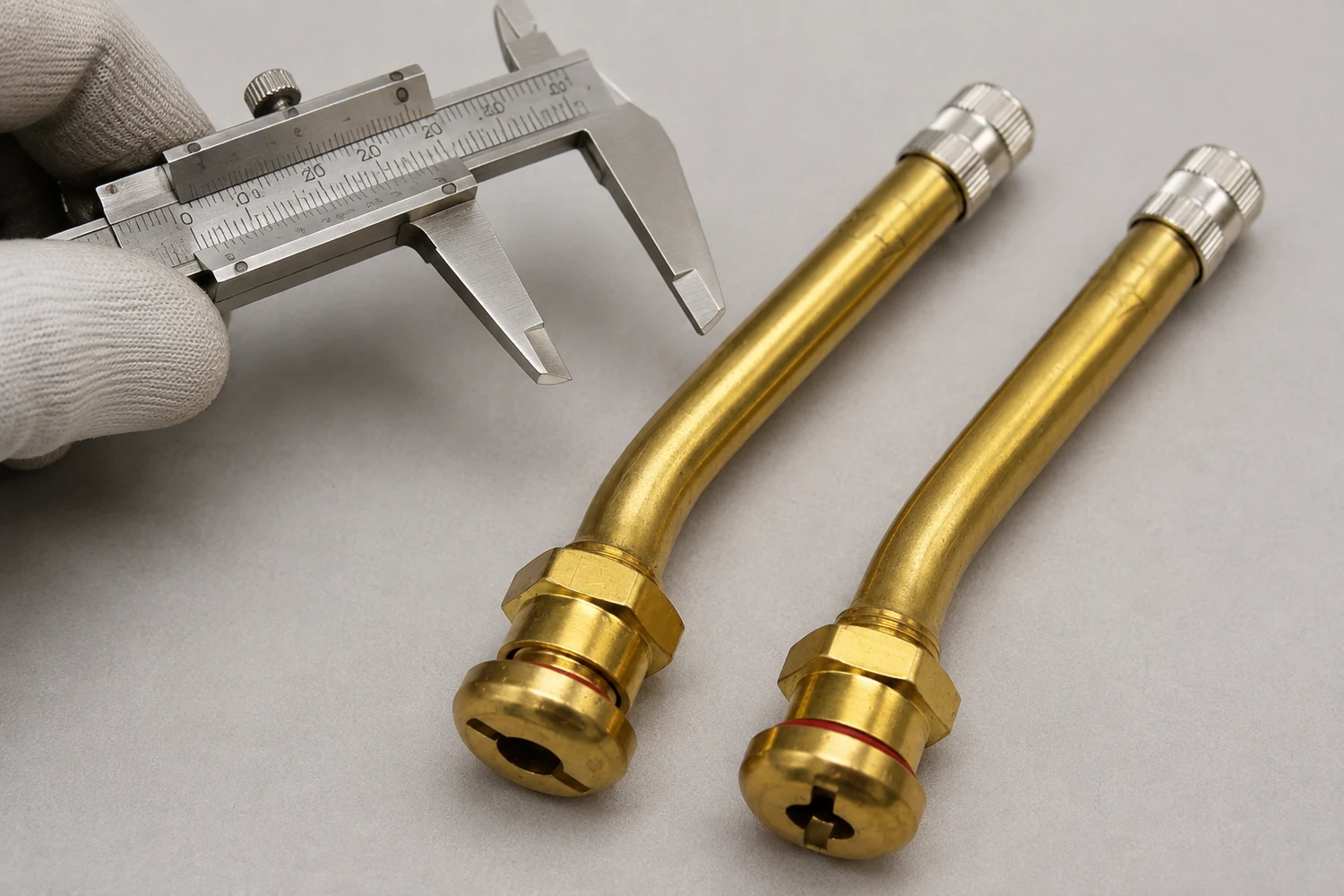
A sample review should begin with the agreed drawing and wheel interface. Check the visible bend, body length, threaded areas, nut and sealing arrangement, core access, cap engagement, and clearance from the tire wall or adjacent hardware. Dimensions should be measured against the buyer’s specification rather than estimated from a photograph.
Test sealing in the intended assembly
The product is described for tire inflation and pressure maintenance. Verification should therefore use an approved wheel-and-tire setup, the correct installation procedure, controlled pressure, and a defined leak-test method. Any change to the sealing ring, gasket, valve core, cap, or surface finish should trigger renewed evaluation because those parts influence the complete sealing system.
- Document the application: record wheel details, required pressure, operating environment, and connected equipment.
- Check the sample: compare material, finish, geometry, markings, sealing parts, core, cap, and packaging with the approved specification.
- Install correctly: use trained personnel, proper tools, manufacturer instructions, and all applicable safety controls.
- Verify performance: inspect seating and run the defined pressure-retention or leak test under controlled conditions.
- Release the lot: retain the sealed sample, inspection method, acceptance limits, and traceable batch records.
Connect Valve Selection With Service Safety
Keep trained personnel and procedures central
Truck and bus tire service involves stored energy and requires trained personnel, correct equipment, and the applicable manufacturer and regulatory procedures. OSHA guidance for covered rim-wheel work addresses training, restraining devices or barriers, remote-control inflation equipment, inspection, and staying outside the trajectory. Product selection should support that system; it cannot make an unsafe service method acceptable.
Use inspection as a maintenance decision
Industry guidance recommends checking valves and cores for air retention, replacing damaged or corroded parts, choosing a valve suited to the operating pressure and service conditions, and checking the rim hole. For fleet maintenance, a controlled replacement policy can tie those observations to tire demounting, wheel inspection, leakage reports, and scheduled service rather than waiting for an avoidable loss of pressure.
Plan Inventory and Custom Supply Without Losing Traceability
The page presents logo carving or laser engraving, sealing-accessory upgrades, and custom packaging. These options can support private label or supply programs, but every change should remain subordinate to compatibility and performance. Artwork location, legibility, approved seals, gasket material, carton quantity, label content, batch identification, and destination requirements belong in the same controlled specification as the valve itself.
Distributors can reduce picking errors by separating models and finishes, using readable inner and outer labels, and linking receiving inspections to the purchase-order revision. Tire-service chains may also connect inventory codes to approved wheel applications and installation instructions. In a wheel balancing workflow, technicians should verify that the selected valve and its installed position do not conflict with the wheel, tire, equipment, or defined service process.
Define an auditable receiving check
Receiving inspection can begin with carton and inner-pack labels, then sample the model marking, finish, visible geometry, threads, cap fit, sealing parts, and surface condition according to the buyer’s plan. If a lot differs from the approved sample or document revision, it should be held for technical review rather than mixed into available stock. The same record can capture batch identity, quantity, inspection date, result, and disposition.
For multi-location service networks, a controlled application list helps distinguish technically approved use from general category language. Inventory descriptions should avoid promising universal fit. Instead, they can state the verified V3.20.7 model, brass material, clamp-in tubeless format, approved finish, and the organization’s own validated wheel references. This gives purchasing, warehouse, and workshop teams one consistent decision trail.
Frequently Asked Questions
What material is declared for V3.20.7?
The product page identifies brass construction. Buyers should confirm the material and approved finish on the physical sample and receiving documents.
What valve format is specified?
It is declared as a heavy-duty metal clamp-in valve for tubeless tires. The exact rim interface and full sealing assembly still require application-level confirmation.
What is the declared working-pressure limit?
The page states up to 150 PSI, depending on application. That qualification means the complete wheel-and-tire specification and manufacturer guidance remain controlling.
Which finishes are offered?
The product data lists brass and a nickel-plated option. The chosen finish should be written into the sample approval and purchase order.
Can the valve be customized?
The page presents custom logo marking, sealing-accessory upgrades, and custom packaging. Buyers should define each requested change and revalidate affected compatibility or performance checkpoints.
Discuss Your Supply Requirements
Buyers evaluating a v brass truck tire valve stem can send SSWYAUTO the target wheel data, pressure requirement, finish, sealing configuration, marking, packaging, and inspection plan for a focused sample review.