

Is a Tire Plug Kit Pro Heavy Duty Flat Tire Ready for Fleets?
A tire plug kit pro heavy duty flat tire setup gives buyers a portable T-handle option for temporary puncture work on supported tubeless vehicle tires.
What the Verified Kit Configuration Includes
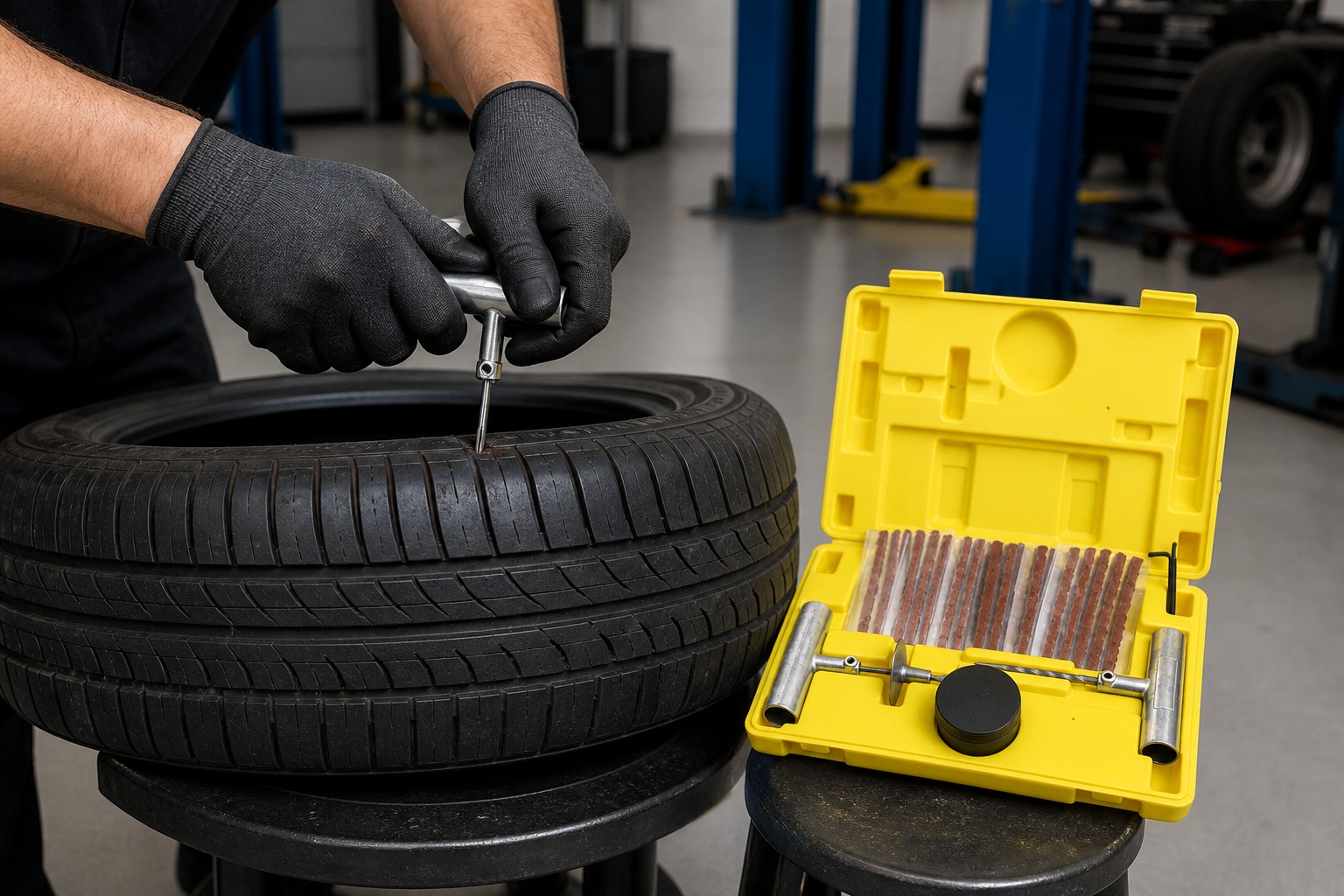
The product page identifies this set as a tubeless tire puncture repair solution built around plug insertion. Its declared and corroborated specification fields agree on steel and rubber materials, a T-handle format, and a repair method based on inserting a rubber plug. That combination gives a buyer a clear starting point: this is a compact response set rather than a tire-removal machine, inflation system, or permanent internal patching station.
Tools and consumables work as one set
The listed accessories are repair tools, rubber strings, and rubber solution. The detailed product description identifies a spiral reamer and an insertion tool among those components. For a procurement team, this matters because tool-only sets and refill-only packs solve different inventory needs. A complete tire repair kit can be assigned to a vehicle, workshop bay, or service technician without relying on an unrelated consumable purchase for the first response.
T-handle geometry supports controlled leverage
The T-handle is a verified design feature, not a generic assumption. It gives the operator a broad surface to hold while cleaning a puncture path and positioning a repair string. Buyers should still compare grip comfort, kit organization, replenishment planning, and operator instructions during evaluation. The handle format supports the workflow, but it does not remove the need to identify whether the tire and puncture are suitable for temporary repair.
| Decision factor | Verified evidence | Buyer implication |
|---|---|---|
| Repair format | Tubeless tire plug insertion | Evaluate for suitable tread puncture response rather than every tire-damage condition |
| Tool form | T-handle | Supports a two-handed grip and controlled tool movement |
| Materials | Steel and rubber | Confirm storage, inspection, and refill routines for tools and consumables |
| Included groups | Tools, rubber strings, and rubber solution | Plan replacement consumables separately after initial use |
| Customization | OEM and ODM available | Discuss assortment and private-label requirements during inquiry |
Match the Kit to Real Service Scenarios
The application list spans passenger cars, SUVs, pickup trucks, commercial vehicles, motorcycles, ATVs, trailers, and agricultural vehicles. This range describes possible tubeless tire contexts; it does not mean every tire or every injury can be repaired. The first selection check is therefore tire construction and damage location, followed by kit completeness, operator competence, and access to inflation and pressure-checking equipment.
Roadside and passenger vehicle use
For passenger vehicle service, compact storage can be valuable because the set can remain in a trunk, roadside support vehicle, or mobile service unit. The product description positions the repair as a temporary way to restore pressure and short-distance mobility. A kit assignment should therefore be paired with a pressure gauge, the vehicle maker's inflation guidance, and a defined route to professional inspection after use.
Workshop, fleet, and mixed-vehicle use
In commercial vehicle service and fleet maintenance, the operational question is consistency. Service managers can standardize where kits are stored, who may use them, how opened materials are tracked, and when consumables are replenished. Motorcycle service requires the same cautious fit check because tire construction, damage position, and manufacturer instructions can change the correct response. The verified application range supports assortment planning, while the tire itself determines repair suitability.
A Practical Selection Checklist for Buyers
A useful evaluation separates verified kit facts from assumptions about the final repair. The tire plug kit pro heavy duty flat tire configuration provides the basic insertion tools and materials described on the product page. It does not independently verify the condition of a damaged tire, supply a permanent internal repair, or determine the correct pressure for a particular vehicle. Those decisions remain part of the service process.
Check six points before purchase
- Tire scope: confirm that target vehicles use supported tubeless tires and document excluded tire types.
- Damage policy: define which tread punctures trigger temporary response and which conditions require immediate tire removal or replacement.
- Kit contents: verify tool count, repair-string quantity, rubber solution, and packaging against the required assignment.
- Storage plan: protect steel tools and consumables from moisture, damage, loss, and uncontrolled use.
- Operator guidance: provide training for puncture assessment, reaming, insertion, trimming, inflation, and post-repair checks.
- Follow-up path: make professional tire inspection part of the response rather than an optional afterthought.
This checklist is especially important for distributors that serve several vehicle segments. A broad application list can help build a marketable assortment, but sales copy should preserve the temporary-use limitation and avoid implying that every puncture is repairable. Clear scope statements make the product easier for service customers to place within an existing safety and maintenance program.
How the Temporary Repair Workflow Fits
The product page presents a three-stage workflow: clean the puncture path with the spiral reamer, load and insert the rubber strip with the insertion tool, then remove the tool, trim excess material, and inflate the tire for temporary driving. Each stage depends on a suitable tread puncture and a tire that has not suffered disqualifying damage. The sequence is simple to describe, but sound judgment remains essential before any tool touches the tire.
Pressure and follow-up are part of the job
Industry and regulator guidance consistently treats tire pressure as a core maintenance issue. After a temporary roadside response, pressure should be checked against the vehicle manufacturer's specified value rather than a guessed universal number. The repaired tire also needs monitoring and professional assessment. The product page itself advises low-speed, short-distance emergency use and prompt workshop maintenance, so a responsible operating procedure should carry that limitation into labels, training, and customer instructions.
- Stop first: park in a safe place and inspect the visible tire condition before selecting a response.
- Use only when suitable: do not treat sidewall damage, major structural damage, or uncertain conditions as normal plug work.
- Restore mobility temporarily: follow the product workflow without representing the outside-in plug as a complete permanent service.
- Escalate promptly: arrange professional inspection and a repair or replacement decision.
Procurement, Packaging, and Replenishment
Procurement teams should evaluate the set as both durable tooling and consumable inventory. Steel tools may stay in service across multiple events when inspected and stored correctly, while repair strings and rubber solution require replenishment after use or condition changes. Packaging should keep the components organized, make missing items visible, and support the intended storage location, whether that is a vehicle, workshop cabinet, distributor shelf, or mobile service unit.
Use customization to clarify the offer
OEM and ODM availability is explicitly listed for this product. Buyers can use an inquiry to define kit assortment, packaging expectations, labeling needs, and refill strategy without inventing unsupported performance claims. A specification review should also distinguish the verified product name, Tire Repair Kit, from descriptive marketing language. That discipline helps wholesale catalogs, private-label programs, and service networks keep claims consistent across listings and sales materials.
Incoming inspection can cover accessory count, visible tool condition, packaging integrity, and alignment with the agreed specification. The product page describes sampling of accessories, batch operation checks, visual and specification inspection, and packaging sealing checks as its quality-control approach. A buyer can discuss how those declared controls map to a particular order, then record the accepted criteria in purchasing documents before production or shipment.
Frequently Asked Questions
Is the kit intended for tubeless tires?
Yes. The verified specification names tubeless tires as the suitable tire type and plug insertion as the repair method. Buyers should still confirm the construction and condition of each target tire before use, because a compatible tire category does not make every puncture suitable for temporary plugging.
What materials and accessories are listed?
The materials are listed as steel and rubber. The accessory group includes repair tools, rubber strings, and rubber solution, while the detailed description identifies a T-handle reamer and insertion tool. Exact quantities should be confirmed for the selected packaging configuration during a commercial inquiry.
Can the plug be treated as a permanent tire repair?
No such claim is supported. The product page repeatedly frames the result as temporary mobility for low-speed, short-distance emergency use and recommends professional maintenance afterward. Current industry guidance also emphasizes internal inspection and an approved permanent repair process when the tire remains serviceable.
Which vehicle applications are identified?
The page lists passenger cars, SUVs, pickup trucks, commercial vehicles, motorcycles, ATVs, trailers, and agricultural vehicles. Application still depends on tubeless tire construction, puncture location, tire condition, and the vehicle or tire manufacturer's instructions.
Is private-label sourcing supported?
The specification states that OEM and ODM customization is available. A buyer can ask about assortment, packaging, branding, and documentation requirements, then verify the resulting proposal against the intended market and service workflow before ordering.
Discuss the Right Kit Configuration
Review the verified tire plug kit pro heavy duty flat tire details, then share the target vehicles, service setting, assortment, packaging, and customization requirements for a focused B2B evaluation.