

Where Do radial repair units Fit in Tire Service Work?
Radial repair units support structured radial-tire repair when trained technicians match the unit, damage, tire type, and approved repair system.
Define the Unit Before It Enters Inventory
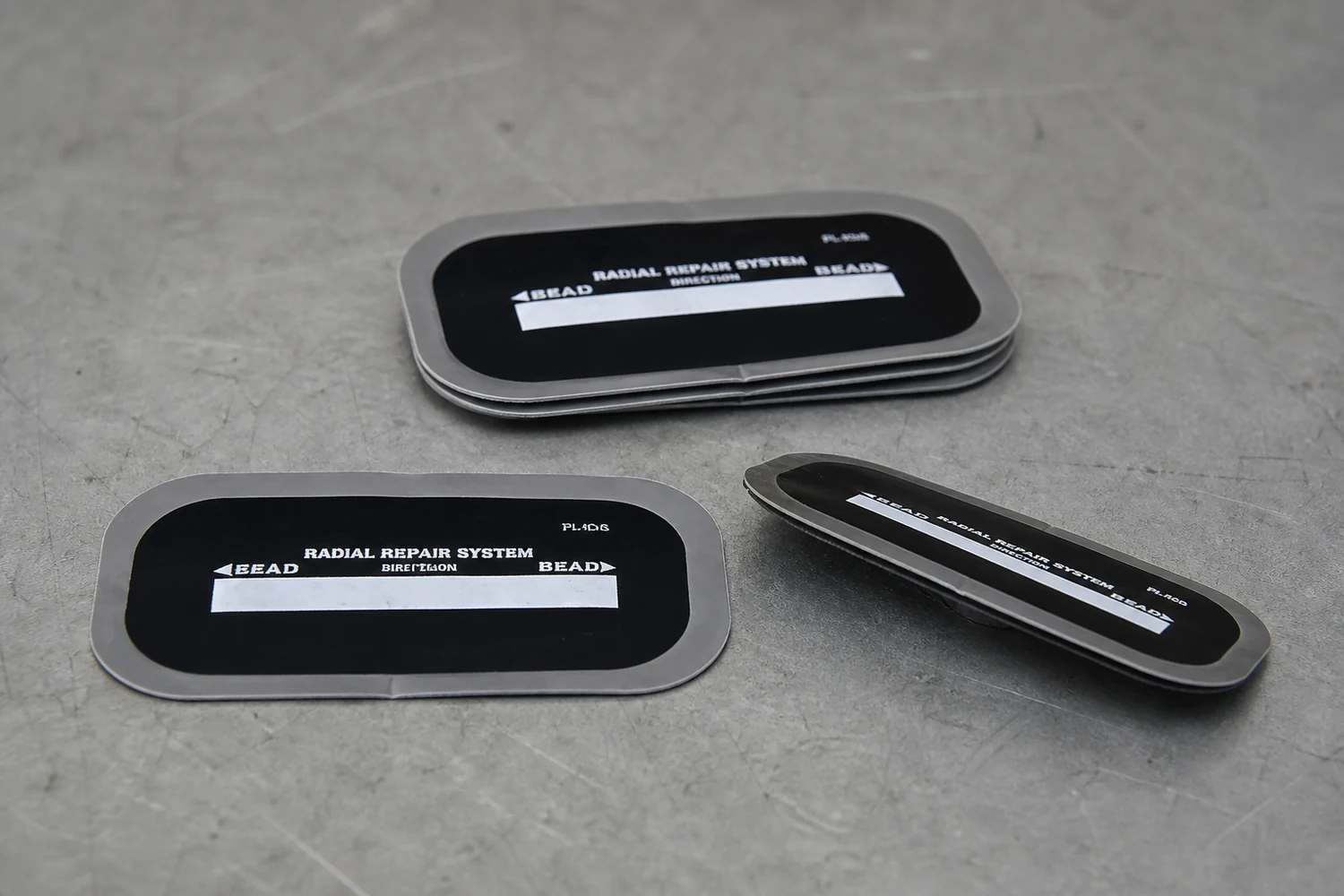
The selected SSWYAUTO page identifies the product as a radial tire repair patch made from a premium rubber compound with a reinforcement layer. It is black, offered in various sizes, and described with rectangular, oval, or customized shapes. The declared repair method is vulcanization repair, while packaging is listed as a box or customized packaging.
Turn page fields into controlled item data
Those fields establish a useful procurement baseline, but they do not specify an exact unit size, reinforcement orientation, curing system, injury limit, shelf-life condition, or tire-manufacturer approval. Each stock-keeping unit therefore needs a written identifier, dimensions, orientation reference, compatible materials, storage requirements, package quantity, and acceptance criteria before it reaches a technician.
| Decision factor | Verified evidence | Buyer implication |
|---|---|---|
| Product type | Radial tire repair patch | Keep the product inside an approved radial-tire repair system. |
| Material | Rubber compound plus reinforcement layer | Approve physical samples and compatible repair materials. |
| Method | Vulcanization repair | Document the complete system and technician procedure. |
| Form | Black; rectangular, oval, or customized; various sizes | Map every stocked option to a distinct item record. |
Separate the product family from the approved option
A general product name is not enough for technicians or purchasing systems. The buyer can build an option matrix that assigns one internal code to each approved combination of size, shape, reinforcement orientation, packaging, and repair-system reference. Receiving labels, bin locations, work instructions, and reorder documents should repeat that identifier consistently. If customized shapes are requested, the drawing or controlled sample should define the geometry instead of relying on a verbal description.
Sample review should also distinguish visual conformity from service qualification. Geometry, color, surface condition, border, direction marks, and package quantity can be inspected directly, while bonding, curing, compatibility, storage, and performance require agreed methods and evidence. Procurement teams can record which checks occur at supplier approval, incoming inspection, technician use, and post-repair quality review. Clear ownership keeps a patch that merely looks similar from being substituted for the approved repair unit.
Decide Whether the Tire Is Repairable First
Unit selection begins only after a trained technician removes and inspects the tire and determines that the damage is within the applicable repair limits. The product page says radial repair units are intended for punctures, nail injuries, and localized damage within repairable areas, but it does not define those boundaries for every tire or service program.
Apply the correct policy to the exact tire
USTMA guidance for passenger and light-truck punctures requires tire removal and internal inspection, limits repairs to defined tread-area injuries, and states that tire-manufacturer or service-policy restrictions still apply. That general guidance should not be used to extend this product to an unapproved injury, tire construction, or vehicle. Commercial, bus, trailer, agricultural, and motorcycle work may follow different manufacturer and repair-system requirements.
The SSWYAUTO page lists passenger car, truck, bus, trailer, agricultural, and motorcycle contexts. A buyer can treat those as application signals for sample review, then require written compatibility for each intended program. The inventory system should never turn a broad application label into automatic repair authorization.
Build a Repeatable Workshop Procedure
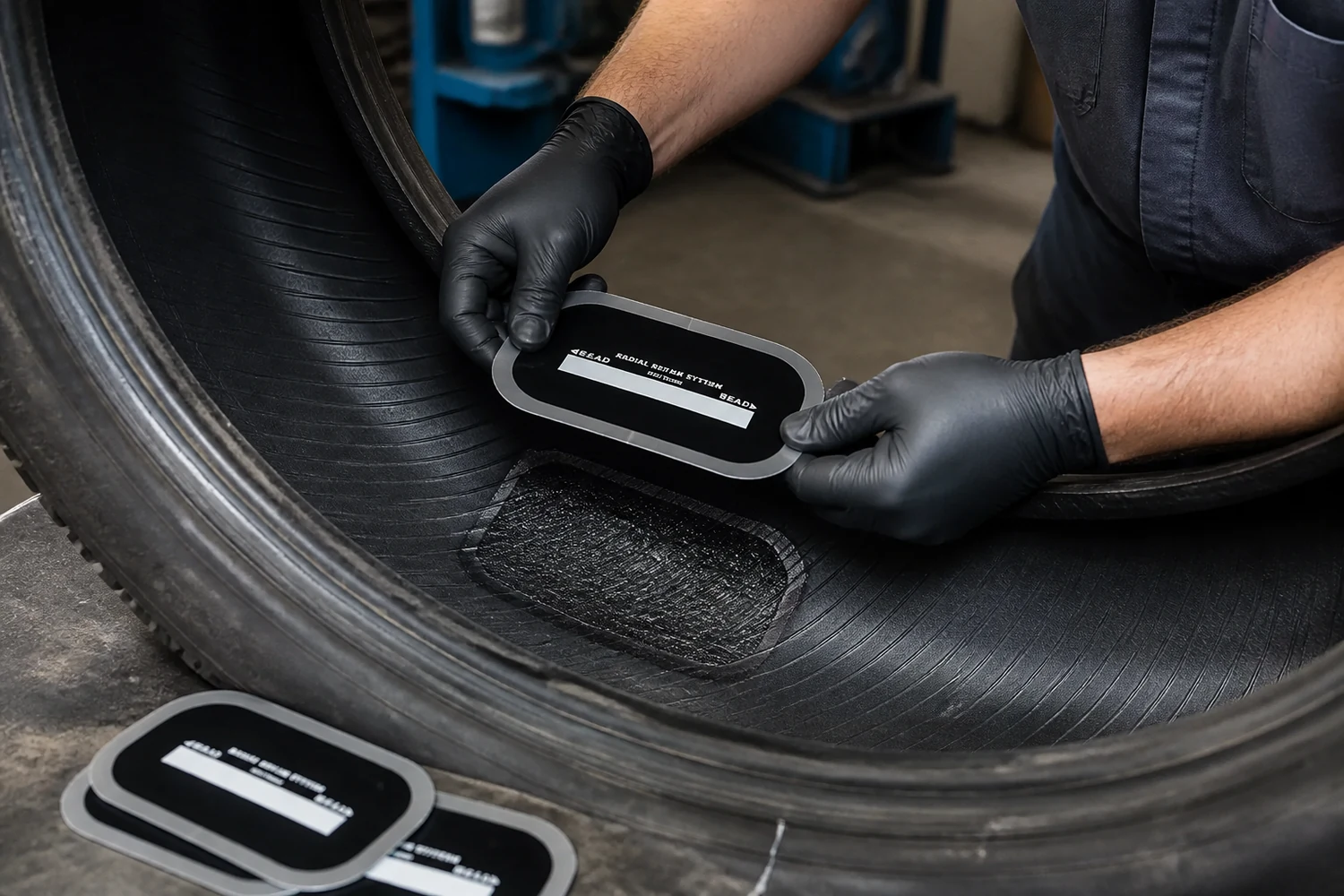
The product page describes a six-stage workflow: inspect damage, remove foreign material, prepare the inner liner, apply vulcanizing cement, install the repair unit with pressure, and complete vulcanization plus final inspection. That sequence is a planning framework, not a substitute for the instructions of the tire manufacturer and the approved repair system.
Control the variables at every stage
- Inspect: record tire identity, condition, injury location, direction, size, prior repairs, and rejection reason when applicable.
- Select: match the exact repair unit, size, shape, and orientation to the approved repair chart.
- Prepare: follow the system's cleaning, buffing, contamination-control, and cement instructions.
- Install: position the unit correctly and apply pressure without trapping air.
- Finish: complete the specified vulcanization process, inspect the result, and document release or rejection.
OSHA requirements for covered large-vehicle rim-wheel service emphasize trained employees, appropriate equipment, component inspection, and safe procedures. Operations should identify which rules apply to their workplace and vehicle class, then connect those controls to local training and service documentation.
Map Applications Without Mixing Functions
A radial repair patch belongs to tire-repair control, even when it is stocked in a workshop that also performs wheel balancing. The selected page lists that broader service context, but it does not make the patch a balancing product. Item descriptions, bins, training, and work orders should preserve the distinction.
Segment service programs by operating context
For passenger vehicle service, buyers can align unit selection with the tire manufacturer's repair policy and the approved system for the relevant tire. Commercial vehicle service may add large-vehicle procedures, load history, fleet documentation, and workplace controls. Motorcycle service requires its own tire-maker and service-policy review rather than borrowing passenger-car limits.
Fleet and aftermarket distributors can use the same product family while maintaining different stocked assortments, training records, package sizes, and traceability needs. Radial repair units should be released into each channel only after the buyer has mapped a product option to the intended tire types, supported damage classes, repair materials, tools, and approval authority.
Qualify Samples, Packaging, and Reorders
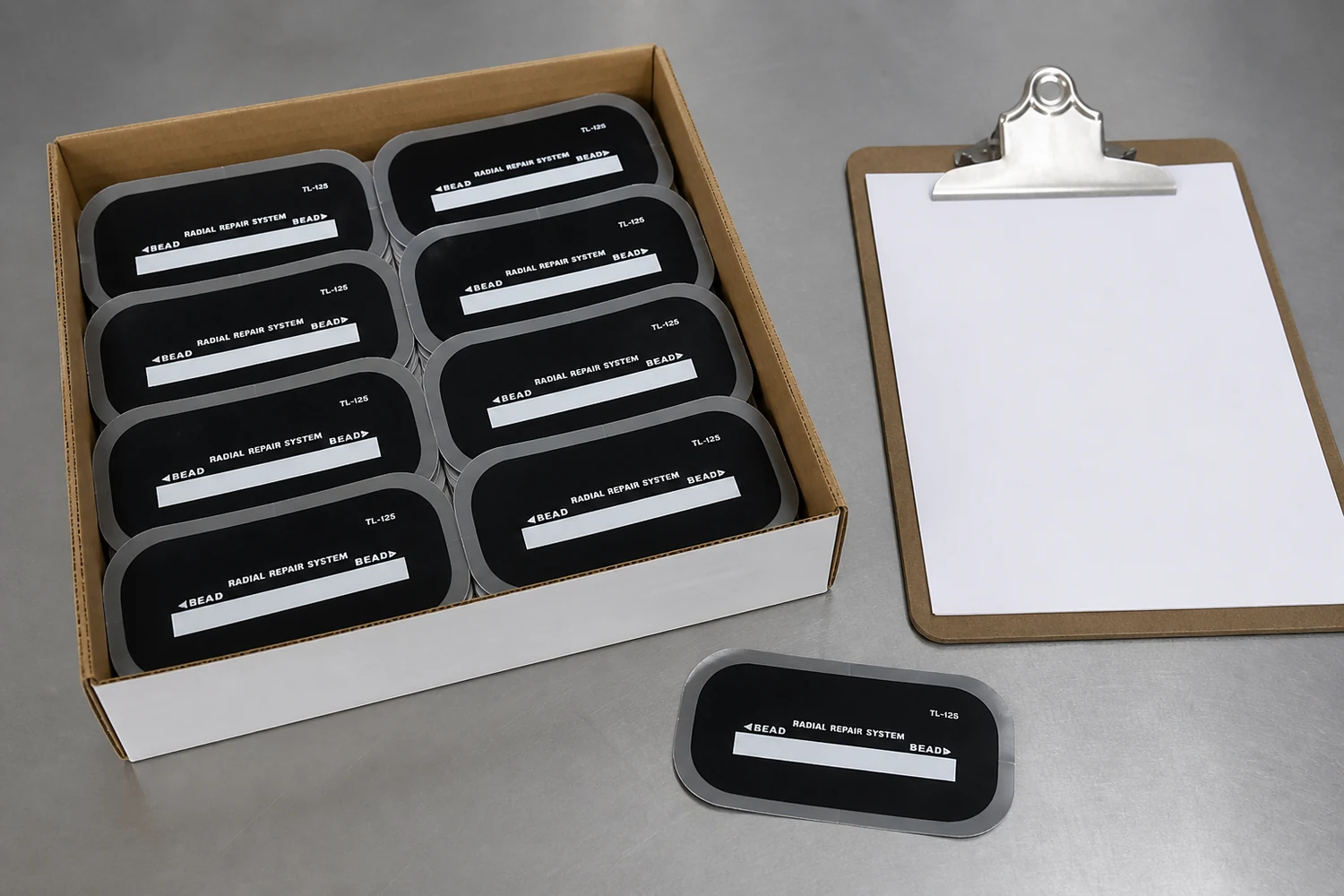
The page supports box or customized packaging and various unit sizes, giving distributors and workshop suppliers a basis for sample and assortment discussions. Before ordering, buyers can request the exact product code, dimensions, shape, reinforcement direction, package quantity, storage requirements, lot identification, and current technical instructions for every option.
Keep the approved reference connected to the lot
Incoming inspection can compare unit geometry, black surface, reinforcement construction, visible orientation marks, packaging, and quantity with the approved reference. Performance criteria and test methods must come from the agreed specification rather than a marketing image. A lot record should connect purchase order, supplier lot, receipt date, storage location, sample result, and release status.
For repeat orders, teams should review changes to material, dimensions, markings, liner, packaging, storage guidance, or repair-system instructions before release. Shelf rotation and storage monitoring can be defined from the approved technical information. Unidentified, damaged, contaminated, or out-of-control units should not enter the service workflow.
Frequently Asked Questions
What material is declared?
The selected page states a premium rubber compound plus a reinforcement layer. Exact construction, dimensions, storage, and compatibility should be confirmed for the chosen unit.
Which repair method is listed?
The declared method is vulcanization repair. The complete approved system, materials, curing conditions, tools, and inspection steps must be defined for the specific program.
Which shapes and sizes are available?
The page lists rectangular, oval, or customized shapes and various sizes. Buyers should request exact option-level dimensions and identifiers before creating inventory records.
Can every damaged radial tire be repaired?
No. A trained technician must inspect the tire and apply the tire manufacturer's policy, applicable industry guidance, and the approved repair system. Unrepairable damage requires rejection.
How should a distributor control reorders?
Reference the approved sample and specification, verify any material, size, marking, packaging, or instruction change, and retain lot-level receipt and release records.
Review a Radial Repair Unit Supply Brief
Distributors, tire-service chains, fleet-service buyers, and workshop suppliers can review the verified radial repair units evidence, then discuss controlled samples, size options, packaging, and documentation requirements.