

Which Tire Valve Core Remover Tools Suit Workshop Use?
Select tire valve core remover tools by checking the working end, handle, valve compatibility and packaging against the actual requirements of the service team.
Start with the Working End and Intended Job
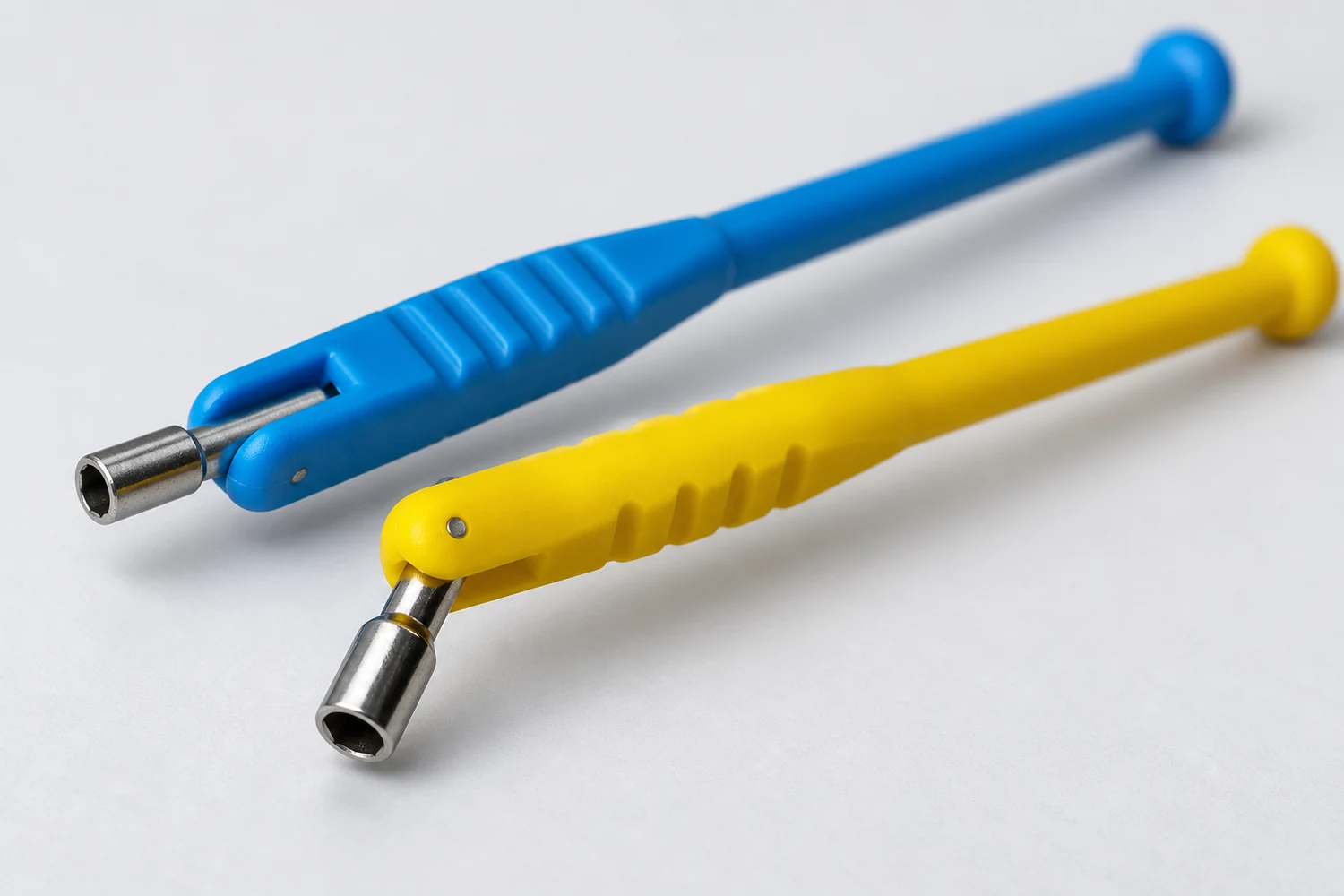
The selected SSWYAUTO product is listed for tire valve core installation and removal, using an engineering plastic handle and metal socket. Those facts establish a practical starting specification. A buyer still needs to confirm which supplied working-end configuration engages the intended core correctly, rather than approve an item from its product name or handle color alone.
Confirm the Interface on a Sample
Ask the supplier to identify the exact version being quoted and provide the dimensions needed for the intended valves. Compare a sample against the workshop requirements before assigning an inventory code. The published table does not give socket dimensions or a measured torque setting, so neither should be inferred from the photograph. Record unresolved interface questions before approving the order.
Separate Core Work from Other Valve Tasks
A purchase specification should name the actual task. Core installation, complete valve replacement and other wheel operations can require different tools and procedures. Treat the supplied configuration as a defined item rather than a universal solution. The workshop should check its service instructions and establish what equipment is required for each operation before evaluating the sample in use.
Match Compatibility to the Service Mix
The product-specific description identifies standard Schrader tire valve cores and lists passenger cars, trucks and motorcycles. For passenger vehicle service, that supports shortlisting the product for the relevant valve types. It does not establish compatibility with every wheel layout or sensor assembly. The technician should evaluate the actual valve and available working space, including any nearby components that restrict access.
Check Access without Forcing Engagement
During sample review, inspect whether the working end can approach the intended interface in the correct alignment. A handle that seems convenient on the bench may have limited clearance around a particular wheel. Do not approve the item solely because it reaches the valve; the supplier and service team should also confirm the intended engagement and handling method for that configuration.
Keep Service Requirements Specific
Commercial vehicle service may involve a different range of wheels and procedures from a passenger-car workshop. Motorcycle service also deserves a separate access check rather than an assumption based on the vehicle list. Record these application groups separately in the evaluation, so a successful check on one example is not presented as proof of universal fit across the entire inventory.
Evaluate Handling and the Condition of the Tool
The documented construction combines engineering plastic with a metal socket. Inspect those components as a connected working assembly: visible damage, irregular surfaces or looseness should be resolved before acceptance. The product description presents an ergonomic handle, but comfortable handling is best checked by the intended users with their normal work gloves and approved service setup.
Use Color as an Identification Choice
Blue, yellow and red handle options are listed, with customization available. A buyer may choose a color for internal tool identification, provided the selected version remains clearly documented. Color alone does not indicate a torque rating, valve type or approved vehicle application. Keep those functional requirements in the written specification rather than encode them informally through appearance.
Do Not Assume Calibrated Torque Control
The published specifications do not state that this product limits or measures installation torque. Where a valve or sensor procedure requires controlled tightening, the service team must use the specified equipment and manufacturer instructions. A basic hand tool should not be treated as interchangeable with a calibrated torque tool merely because both are described as suitable for core work.
Build a Comparison Table around Verifiable Evidence
A useful comparison places every candidate against the same questions. The following table separates the published product description from the points a buyer should still confirm. It avoids turning missing dimensions, packing quantities or performance data into assumptions. Use the completed review to define an acceptable sample and the information required on subsequent orders.
| Decision factor | Published evidence | Buyer check |
|---|---|---|
| Application | Tire valve core installation and removal | Confirm the required operation and supplied working end. |
| Construction | Engineering plastic and metal socket | Inspect handle condition and component connection. |
| Compatibility | Standard tire valve cores | Check the actual core type and access conditions. |
| Handle color | Blue, yellow or red; customizable | Document the selected version without implying a rating. |
| Packaging | Polybag, carton or customized packaging | Agree the unit count, protection and identification. |
| Torque specification | Not stated in the published technical table | Follow the valve instructions and specify any required torque tool. |
Approve Supply through a Documented Sample Review
Before standardizing tire valve core remover tools, connect the approved sample to the purchasing record. The page lists polybag, carton and customized packaging options, but a purchasing team should agree the actual supplied unit and quantity directly. Product photographs showing several colors do not, by themselves, establish how many tools are included in an order.
- Define the application: identify the valves and workshop operations the tool must support.
- Review the sample: confirm the working end, handle configuration and physical access.
- Check service requirements: identify any separate torque equipment or procedures required.
- Specify the order: record color, packaging, unit count and supplier reference.
- Plan receiving checks: compare delivered items against the approved sample before distribution.
In a workflow that also includes wheel balancing, keep tool selection tied to the specific valve task rather than claim that the hand tool performs balancing. Professional training and the applicable tire, wheel and equipment instructions remain essential. Purchasing records should identify the tool clearly enough that receiving staff and technicians are evaluating the same configuration.
Retain a dated sample photograph alongside the written specification, and ask the supplier to flag configuration changes before shipment. This makes the acceptance decision traceable without assuming that every later order is identical to the first delivery.
Frequently Asked Questions
Does the vehicle list establish universal compatibility?
No. It identifies the stated application groups, while suitability still depends on the actual valve core, working-end configuration and available access. A buyer should compare the intended valves with a sample and the relevant service instructions before approving use across a workshop network.
Is a torque setting supplied for this tool?
The technical table does not state a measured or preset torque value. Do not assign one from a similar-looking product. When controlled tightening is required, follow the valve or sensor instructions and use equipment with the appropriate documented capability.
Are the pictured colors necessarily supplied together?
The page lists handle color options and customization, but a photograph is not a packing list. Confirm the selected colors, number of tools per sales unit and packaging arrangement in the order. This is especially useful when distributors supply several service locations.
What should a repeat-order check include?
Compare the supplied working end, handle configuration, selected color and packaging with the approved reference. Inspect for visible damage and confirm any changed specification with the supplier. A familiar name or carton should not substitute for verifying the physical version that was ordered.
Confirm the Configuration before Repeat Supply
Evaluate tire valve core remover tools against the actual valve interface, access conditions and receiving requirements. Review the SSWYAUTO product specifications with the supplier, resolve missing dimensional and packing details, and document the version your service team can accept.