
A Wheel Weight Removal Tool for Controlled Rim Service
Select a wheel weight removal tool by matching its scraper design, material and working access to adhesive weights, wheel finishes and workshop requirements.
Choose the Scraper for the Attachment Being Removed
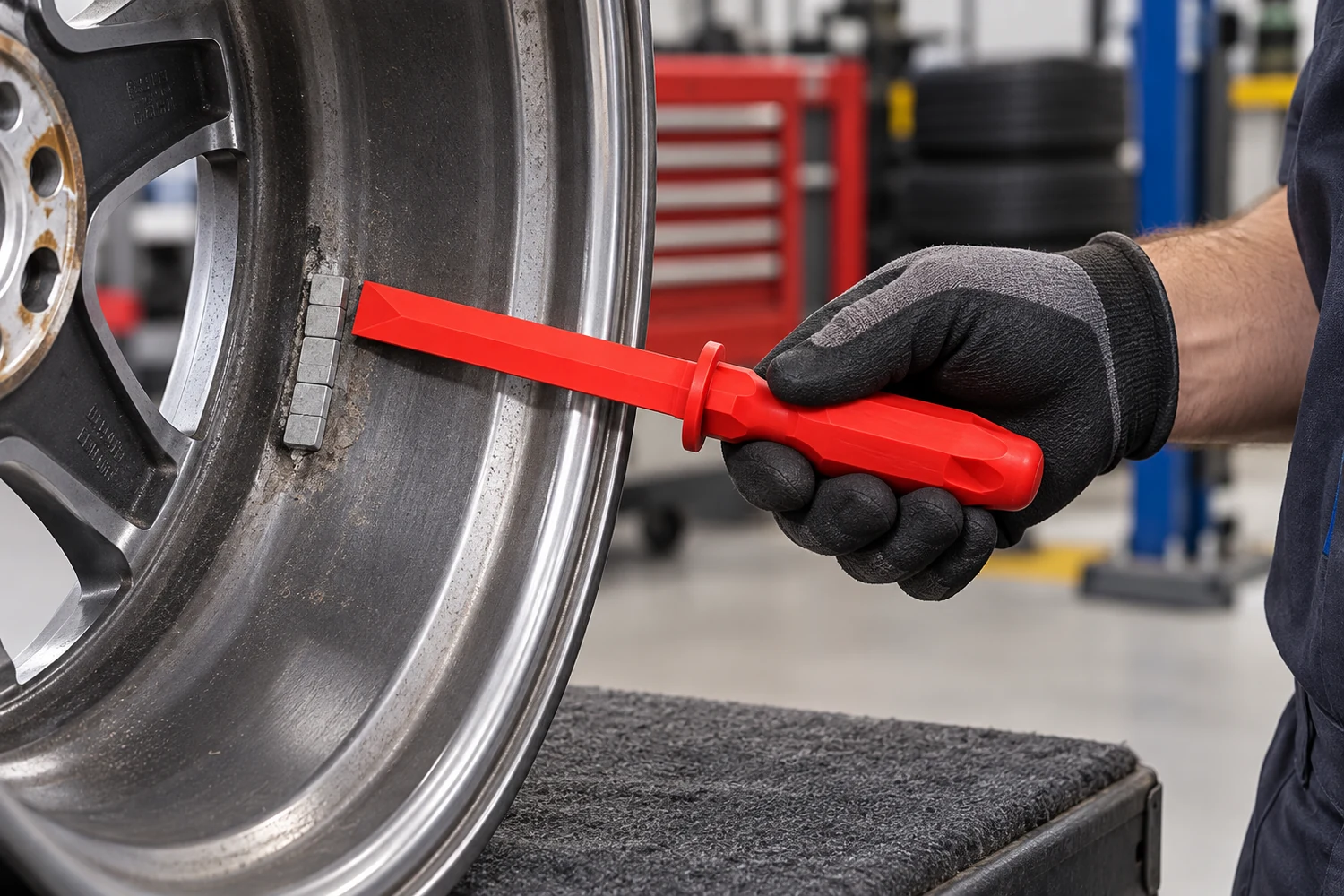
The SSWYAUTO listing identifies this product as an adhesive wheel weight scraper. That distinction should appear in the purchasing specification because different weight attachments create different tool requirements. A workshop evaluating this item should start with its adhesive-weight jobs and the access available around those weights. The product name alone does not make it a replacement for every removal tool in the service bay.
Separate the Tool Function from the Whole Service
The scraper supports removal during tire balancing service, wheel maintenance and automotive repair. It does not measure imbalance or determine the mass and position of replacement weights. Keep those operations in the workshop procedure with the appropriate equipment. This separation helps buyers judge the tool on its actual role instead of expecting a hand scraper to complete the entire balancing process.
Inspect the Working Approach on a Representative Wheel
A useful sample check considers whether the edge can reach the intended adhesive interface while the technician maintains controlled handling. Wheel contours, spokes and the position of the old weight can restrict the approach. Select a representative service example and follow the applicable wheel and equipment instructions. If access is unsuitable, resolve the tool choice before making it part of a standard workshop kit.
Evaluate Material and Surface Contact Together
The technical table specifies high-strength plastic / composite material, while the product description presents a chisel-style design. These are useful facts for a sample review, but the page does not identify an exact polymer grade, blade dimensions or an allowable operating force. Buyers who need those details should request them directly rather than assign specifications from a visually similar product.
Treat Finish Protection as a Condition to Verify
Plastic scraper construction is relevant when evaluating contact with a finished wheel. It should not be interpreted as a guarantee that scratches cannot occur. The condition of the edge, contamination on the tool and the existing wheel finish all deserve attention during assessment. Record the wheel surface used for the trial so the result remains connected to a defined application rather than a general promise.
Check Handling before Agreeing a Standard Item
The described chisel-style structure gives the buyer a specific form to assess. Ask intended users to review grip comfort, reach and control with their normal work gloves and approved setup. Examine the supplied sample for visible damage or irregular edges before use. Appearance alone cannot establish durability, and the listing provides no quantified service-life result that should be carried into purchasing documents.
Match the Application Range to the Workshop Mix
The product-specific technical table lists cars, SUVs and trucks, along with alloy wheels and aluminum rims. In passenger vehicle service, these categories help identify candidate jobs for evaluation. They do not establish compatibility with every coating, wheel profile or weight position. Keep the actual wheel and attachment type visible in the acceptance record, especially when several locations share one purchasing catalog.
Keep Different Vehicle Groups in Separate Checks
Commercial vehicle service may present different access conditions from the passenger-car examples used in a first trial. The page also includes motorcycles among its application labels; motorcycle service should therefore be assessed against the actual wheel arrangement rather than treated as automatically covered by a car-wheel test. Document which examples were reviewed and which remain unassessed before expanding the item across a service network.
Distinguish Removal from Subsequent Preparation
Removing an old wheel weight and preparing the wheel for its replacement are related but separate activities. Inspect the surface after removal and follow the relevant instructions for residue cleaning and replacement installation. Do not invent a universal solvent, temperature or pressure from this tool listing. During wheel balancing, the scraper should remain one identified part of the approved workflow, with responsibilities for the remaining steps clearly assigned.
Compare Candidates with the Same Evidence Questions
A comparison table should distinguish published information from points still requiring confirmation. For this wheel weight removal tool, the strongest starting evidence concerns its function, material and application categories. Missing dimensions or packing quantities belong in the supplier-question column. This approach makes a sample approval useful to both procurement staff and the technicians who will receive the tool.
| Decision factor | Published evidence | Buyer check |
|---|---|---|
| Function | Adhesive wheel weight scraper | Confirm the attachment and intended removal task. |
| Material | High-strength plastic / composite material | Request grade details when needed; inspect the sample edge. |
| Design | Chisel-style structure | Evaluate reach and handling around representative wheels. |
| Applications | Cars, SUVs, trucks, alloy wheels and aluminum rims | Define the actual wheel surface and access conditions. |
| Dimensions | Not stated in the technical table | Obtain the measurements required by the purchasing specification. |
| Supply options | Bulk orders, private labeling and customized packaging | Agree labeling, sales-unit quantity and packing details. |
Turn the Sample Review into Repeatable Receiving Checks
The page explicitly offers bulk-order, private-label and customized-packaging support. Buyers can use that opportunity to agree a clear receiving reference. A photograph showing more than one tool does not confirm the number supplied per sales unit. Establish the quantity and labeling in the order, and link those commercial details to the physical version accepted by the service team.
- Define the job: identify the adhesive weight, wheel surface and available access.
- Review the sample: check edge condition, grip and the intended approach to the weight.
- Record open questions: resolve required dimensions and material details with the supplier.
- Agree the order: specify the approved version, unit quantity, labeling and packaging.
- Inspect deliveries: compare visible condition and configuration with the retained sample reference.
For a distributor supplying several workshops, a dated sample photograph and short acceptance sheet can keep the order description consistent. Ask the supplier to identify changes before repeat shipment. If a delivered tool differs from the approved reference, review the difference before distribution instead of assuming that the familiar product name establishes an equivalent item.
Frequently Asked Questions
Is this scraper specified for every wheel weight attachment?
The listing identifies adhesive wheel weight removal. Other attachment systems need their own tool and procedure assessment. Buyers should name the actual attachment in the order specification and avoid treating the general product name as evidence that every type of weight can be removed with the same scraper.
Does plastic construction guarantee a mark-free wheel?
No unconditional surface guarantee should be assumed. Assess the tool edge, contamination, existing finish and handling conditions on a suitable sample. The material description helps select a candidate, while the wheel instructions and actual service conditions determine how the tool should be evaluated.
Can dimensions be copied from a similar-looking tool?
No. The selected technical table does not provide length or blade dimensions. Obtain those values from the supplier if they matter to access, storage or purchasing acceptance. Similar appearance and color do not establish identical geometry or performance.
What should be agreed for private-label supply?
Confirm the approved physical version, labeling content, sales-unit quantity and packaging arrangement with the supplier. Keep those details connected to the accepted sample. The published availability of customization does not, by itself, establish an order quantity, delivery schedule or a completed specification.
Approve the Tool against a Defined Wheel-Service Job
Evaluate the wheel weight removal tool with the actual adhesive-weight task, rim finish and access conditions in view. Review the SSWYAUTO product details, resolve missing dimensions and packing information, and document the sample your workshop can accept before agreeing repeat supply.