

Tire Repair Patchs Selection Guide for Workshops
Tire repair is a high-frequency operation project in auto repair shops, and tire patches are the core consumables. The selection directly determines the repair airtightness, service life, and after-sales complaint rate of the shop. Many repair workshops have encountered problems such as slow air leakage, tire patch detachment, and cracking at high-speed repair sites due to incorrect matching of film specifications and types. This article combines the maintenance standards for vacuum tires, inner tubes, and truck load tires to sort out the selection logic, differentiation standards, and procurement quality control points of repair film under different working conditions, providing reference for establishing a standardized consumables selection system in auto repair workshops.
1. Mainstream repair film categories and applicable scenarios
At present, the commonly used repair film in the workshop is divided into three categories: Cold Tire Patches, Mushroom Tire Repair Plug Patch, and Tire Repair Raw Rubber. The three types have significant differences in repair structure and adaptability to wounds, and cannot be mixed.
(1). Conventional cold Tire Repair Patchs (internal patch repair)
Structure: Single layer rubber vulcanized substrate, with a vulcanized adhesive layer on the back, only sealing the inner airtight layer of the tire, without filling the hole rod body.
Suitable operating conditions:
- Small nail holes on the vacuum tire tread of household cars, electric vehicles, and motorcycles, with a puncture aperture of ≤ 2mm;
- The small hole in the inner tube is damaged, straight and without oblique tearing wounds;
- Economic repair plan for daily commuting and short distance commuting vehicles.
Advantages: Low procurement cost, fast construction speed, complete stocking specifications (9 #/10 #/11 #/12 # circular and square multifunctional patches);
Shortcomings: It only seals the inner wall and cannot fill the puncture channel outside the tire. Coarse holes and slanted wounds are prone to water ingress, and there is a risk of slow air leakage at high speeds for a long time.
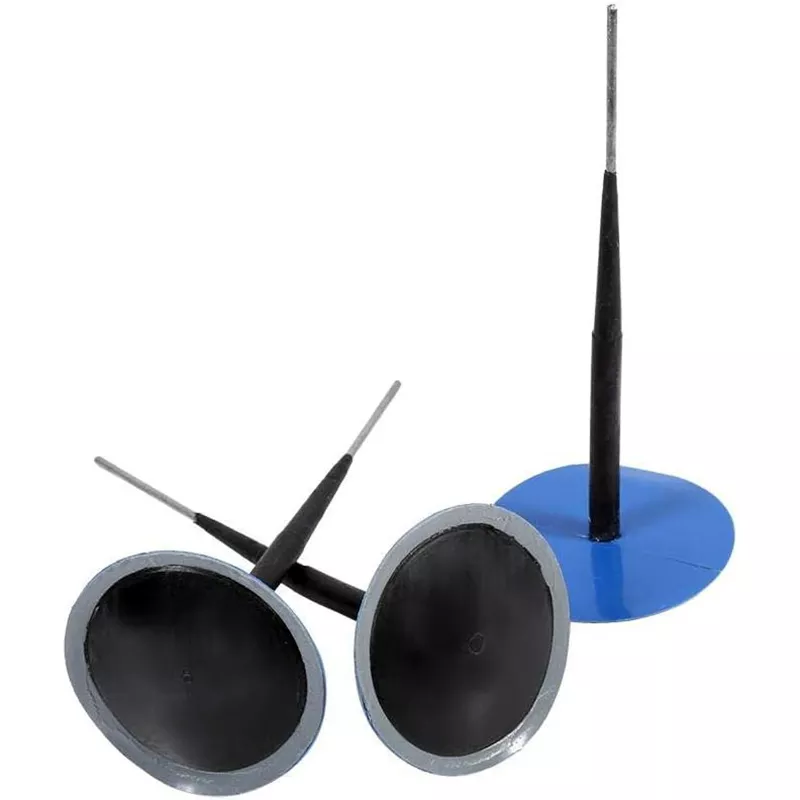
(2). Mushroom Tire Repair Plug Patch (versatile and long-lasting repair part)
Structure: Integrated design, inner large film sealed airtight layer, middle rubber rod fully filled puncture hole, achieving dual sealing inside and outside, repair strength closest to the original tire structure. Today's headline.
Suitable operating conditions:
- Puncture hole diameter of 2-6mm, coarse screw, iron plate puncture injury;
- Oblique puncture, damage near the fetal shoulder;
- Frequently running on highways, long distances with full load SUV、 Long term repair of truck tires;
- Customers pursue one-time repairs and reduce the need for secondary rework.
Advantages: Waterproof, anti deformation, high temperature resistance, no impact on tire speed level after repair, extremely low after-sales failure rate;
Shortcomings: Higher individual product costs, longer disassembly and assembly of tires, and nail piercing processes.
(3). Tire Repair Raw Rubber (for heavy-duty trucks)
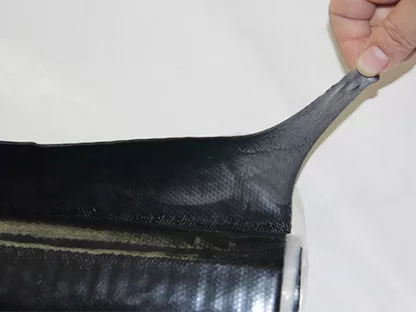
Structure: Thickened rubber sheet with fiber-reinforced layer, which needs to be vulcanized and fused with a high-temperature hot repair machine for extremely strong adhesive strength.
Suitable working conditions: Large and medium-sized trucks, passenger cars with diagonal tires, heavy-duty vacuum tires with extensive scratches, and severe shoulder damage;
Not recommended for use in family cars: High temperature heating can damage the steel wire curtain inside the radial tire, causing premature aging and cracking of the tire.
2. Accurate selection criteria based on wound size/location (workshop execution standards)
(1) Small hole on the tread (hole diameter < 2mm, fine iron nail)
Priority should be given to using 10 # and 11 # standard circular cold repair film, covering damaged areas with a minimum of 5mm to ensure a sealed area; Electric and bicycle inner tubes are made of 9 # small-sized film.
(2) Large holes in the tread (diameter 2-6mm, thick screws, metal fragments)
Unified use of mushroom nail film of corresponding size, and prohibit the use of cold patching alone to prevent rainwater cement sand from infiltrating the tire body and corroding the curtain line.
(3) Damage to the shoulder joint of the tire
Regardless of the aperture size, all use thick mushroom nails, which cause significant deformation of the tire shoulder and make it easy for ordinary cold patching film to curl and fall off.
(4) Tire sidewall damage
The sidewall fabric is repeatedly bent for a long time, and only minor wounds can be treated with thickened and reinforced mushroom nails; If the wound length is greater than 6mm, it is recommended to replace the tire directly. Film repair has no long-term safety guarantee.
(5) Large area scratches on truck load tires
Paired with fiber hot patching film for high-temperature vulcanization repair, it enhances the load-bearing and compressive capacity.
3. Four core quality control judgment points for purchasing film in the workshop
(1). Material and vulcanization process
High quality repair film is made of high-purity butyl rubber substrate, which is elastic and not easy to break when stretched; The vulcanization layer is uniform, free of impurities, dry rubber, and particles. Poor quality film has a high content of recycled rubber, which hardens at low temperatures and softens at high temperatures. It may peel off and leak air after short-term use. Differentiation method: Tear off the isolation film, press and bond the vulcanized layers of the two films together, and then pull them hard to separate into qualified products.
(2). Specification and size matching
The store needs to stock a complete set of multi specification film: small size 9 #, commonly used 10 #/11 #, large size 12 # square multifunctional patches, covering all categories of tires for electric vehicles, cars, and light trucks; The diameter error of the same model of film shall not exceed 1mm, and a smaller size may result in insufficient sealing.
(3). Isolation film and storage conditions
Qualified film comes with a complete transparent isolation protective film to isolate air and prevent premature failure of the vulcanization layer; Storage should be placed in a cool and dry place, avoiding direct sunlight and high temperature storage, otherwise the film viscosity will significantly decrease.
(4) Differentiation of tire types for adaptation
Vacuum tire specific film: thickened airtight layer, suitable for tubeless wheels;
Special film for inner tubes: thin and highly flexible, suitable for inner tubes of bicycles, motorcycles, and tricycles;
Universal multifunctional film: suitable for car vacuum tires, light trucks, and inner tubes, suitable for small and medium-sized comprehensive maintenance workshops with limited stock.
4.Common selection errors and pitfalls in workshops
Misconception 1:
Only use cold patching patches to repair large holes
Only the inner wall is sealed and the holes are not filled. Rainwater enters the corroded steel wire, and there is a high probability of slow air leakage within 1-3 months, which increases the risk of store rework and customer complaints.
Misconception 2:
Bulk stocking of low-priced recycled rubber film
In the short term, it seems to save consumable costs, but repairing cracks at high-speed driving poses safety hazards and damages the reputation of the store.
Misconception 3:
Using ordinary cold repair film for sidewall damage
The tire sidewall repeatedly bends, and the edge of the film continues to lift under stress, resulting in a very fast repair failure rate.
Misconception 4:
The film size just covers the wound
The specification requires that the edge of the film should exceed the damaged position by more than 5mm, and a deformation allowance should be reserved to prevent edge warping during driving.
5. Suggestions for stocking and matching workshop consumables
- Small quick repair shop (mainly for electric vehicles and family cars): mainly using 10 # and 11 # cold repair film, with a small amount of small mushroom nails as backup;
- Comprehensive auto repair shop (sedan+SUV+light truck): full specification cold repair film+full-size mushroom nail set, with regular vulcanized glue and compaction roller matching tools;
- Truck specialized maintenance workshop: mainly equipped with thickened hot repair fiber film, large-sized heavy-duty mushroom nails, and high-temperature hot repair equipment.
The reasonable selection of Tire Repair Patchs is the fundamental link for standardized construction, reducing after-sales problems, and enhancing customer trust in auto repair workshops. The workshop can establish a fixed consumables procurement list based on the main vehicle models and common damage types of the store, standardize the selection standards for repair technicians' films, and balance repair safety, durability, and store operating costs, reducing tire repair failures from the source of consumables.