
Which truck and bus tire valve details should buyers check?
Choose a truck and bus tire valve by matching the stated rim opening, straight stem geometry and sealing components to the wheel and its service requirements.
For a purchasing team, the decision starts with the specific wheel and the sample being evaluated. A familiar part reference is useful, but it does not describe every interface or confirm that the supplied configuration matches an existing installation. The straight TR570 provides an identifiable example: its product information separates the stem form, mounting method, sealing materials and dimensional references that a buyer can carry into a technical review.
Identify the straight configuration before comparing quotations
The selected product is the TR570 straight brass clamp-in valve. SSWYAUTO describes its application as tubeless truck and bus tires and lists brass with rubber sealing components. The same page discusses an angled variant in a separate product column. That distinction is useful because an order described only by the shared page title could leave the required stem form unclear.
Keep the reference tied to the sample
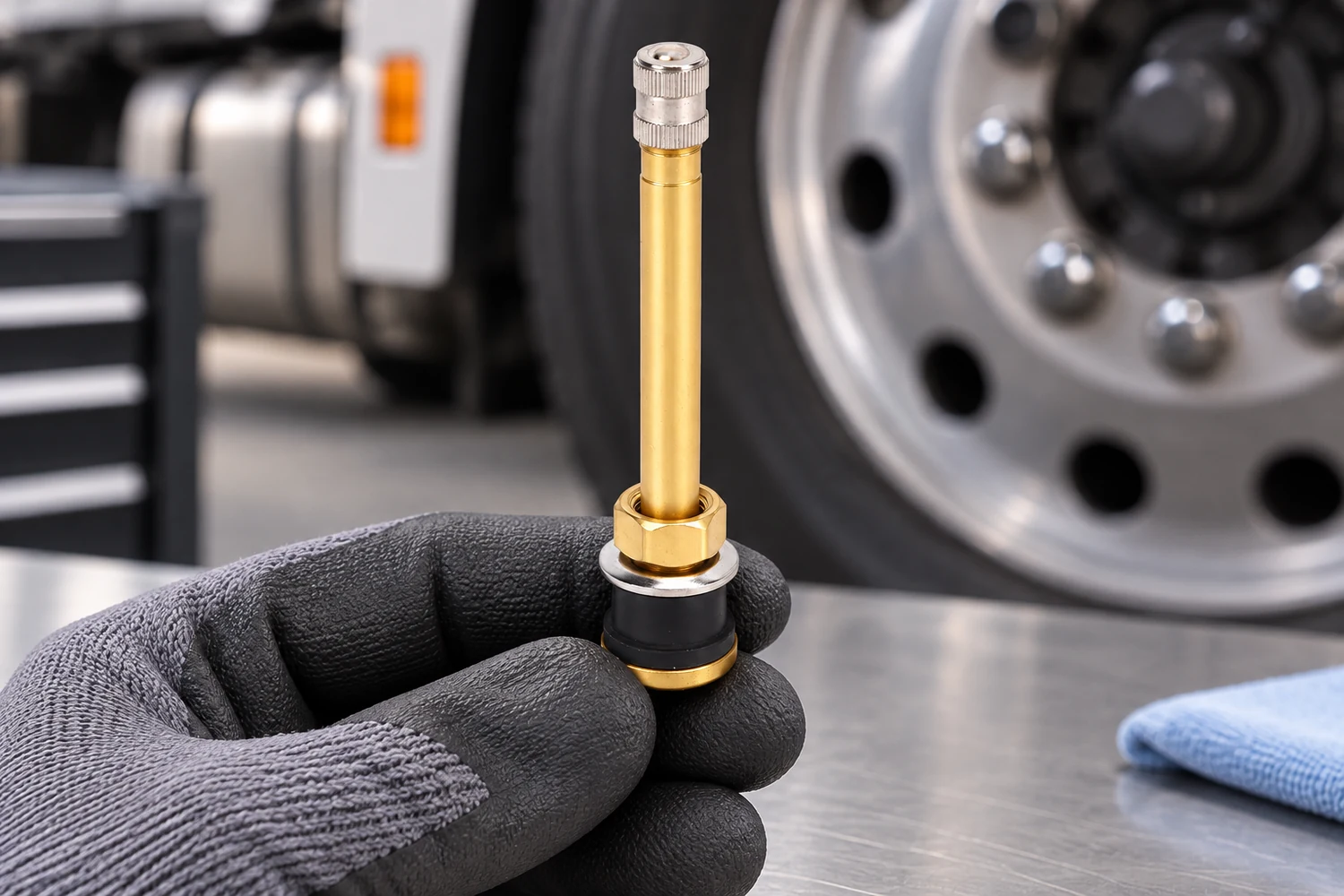
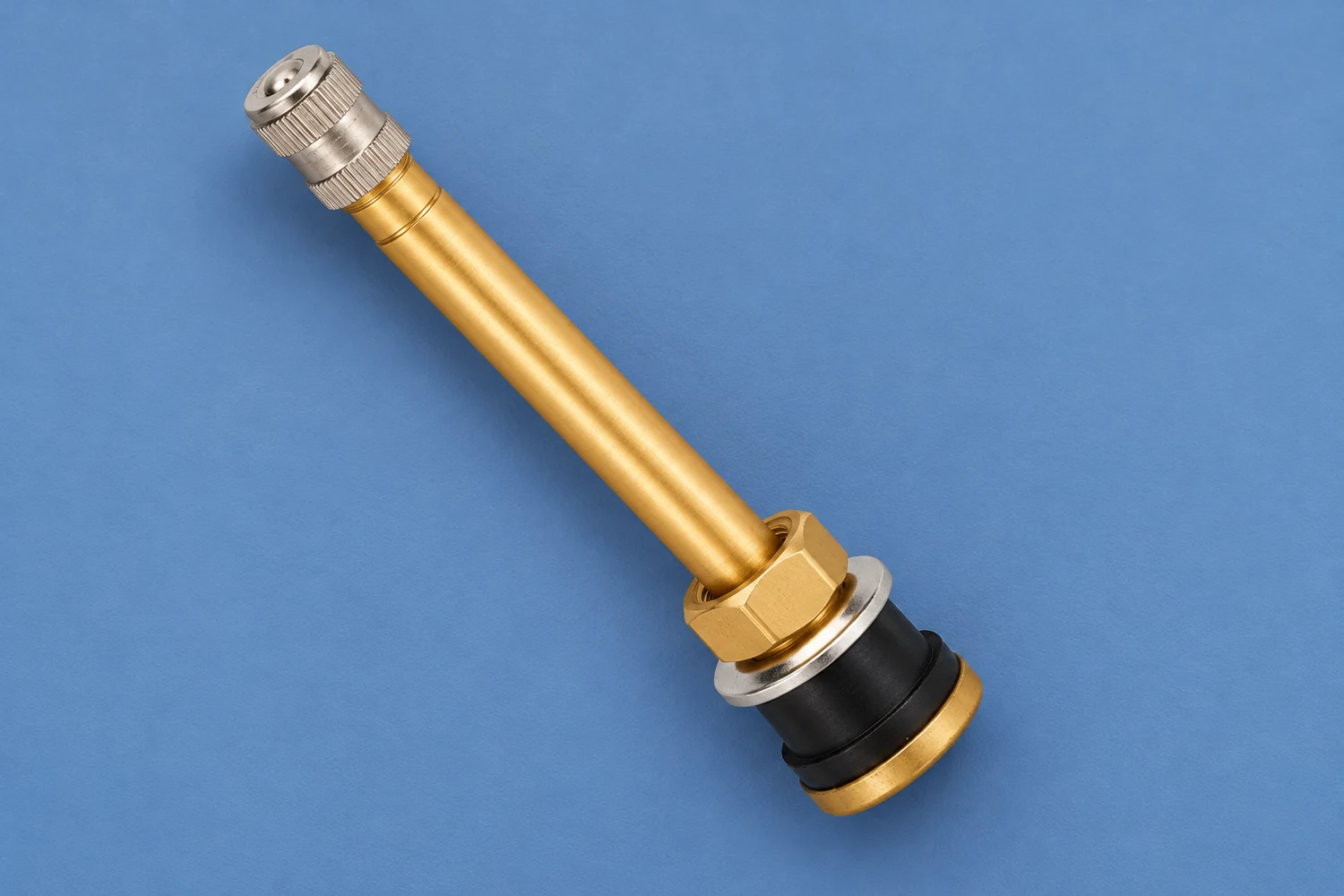
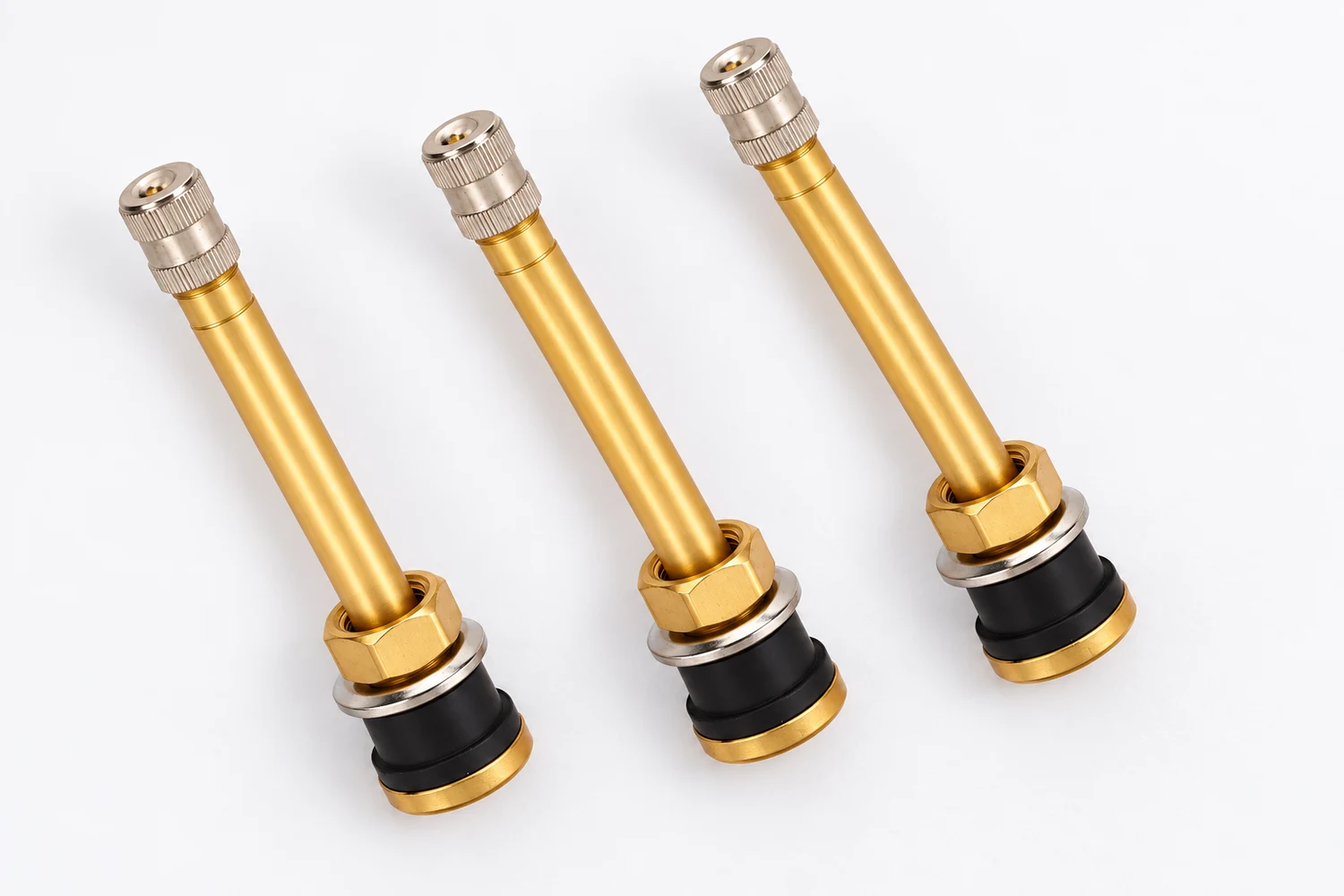
A truck tire valve stem should be identifiable in the quotation, sample photograph and receiving record. Record the complete model reference and retain a photograph showing the whole assembly. The reviewed straight sample includes the stem, fitted metal cap, retaining nut, washer and rubber sealing area. A distant photograph or partial detail can hide the relationship between these components.
Separate identity from suitability
Confirming that a sample is the requested model answers an identity question. Confirming that it suits the intended wheel is a separate decision. The reviewer should connect the declared dimensions to the actual wheel opening and clearance, then obtain the installation information applicable to that configuration. A brass appearance alone does not establish either conclusion.
Read the dimensional record as a set of interfaces
The TR570 specifications should be considered together. The product page lists a straight form and an approximate overall length alongside the stem and base diameters. These values describe different parts of the assembly; one matching measurement cannot stand in for the complete review. The following table preserves the dimensions as declared for the straight variant.
| Decision factor | Declared TR570 value | Buyer check |
|---|---|---|
| Mounting method | Clamp-in metal valve | Confirm that the wheel uses the intended mounting arrangement. |
| Materials | Brass + rubber | Review the supplied sealing components with the sample. |
| Rim opening | 0.625 inch / 15.7–15.9 mm | Check the actual wheel opening and applicable wheel specification. |
| Stem form | Straight, 0° | Check access and clearance for the required position. |
| Stem diameter | 7.8 mm | Compare the corresponding dimension in the sample record. |
| Base diameter | 19 mm | Review the base and sealing interface together. |
| Overall length | Approximately 83–84 mm | Confirm the measurement reference and available wheel space. |
Retain approximate values as approximate
An approximate published length should remain approximate in the purchasing brief. It is not a manufacturing tolerance or an acceptance limit. If length is decisive for the intended wheel, request a drawing or an agreed measurement method and record the confirmed requirement. Do not convert a descriptive range into a guarantee that the page does not provide.
Review the opening and sealing area together
The stated rim-hole size is a selection input, not a declaration of universal wheel compatibility. Consider the condition and form of the seating area, the supplied rubber component and the relevant wheel instructions. If information needed for approval is absent, keep that item open in the technical review rather than assuming that the model reference resolves it.
Check access in the intended wheel position
A truck and bus tire valve also needs to remain accessible in the intended wheel arrangement. The straight TR570 is the configuration under review here. The site presents an angled alternative separately, which reinforces the need to confirm the requested geometry instead of treating both variants as interchangeable.
Use the real service context
For commercial vehicle service, the sample review should consider how the inflation connection and pressure-checking equipment reach the valve. Ask the workshop to assess the intended position with its normal equipment and the applicable wheel guidance. Record any access constraint before approving stock for that job. A general truck or bus application label cannot describe every wheel layout.
This is an evaluation step, not an instruction to improvise an installation or bend a supplied stem. If the straight configuration does not match the documented requirement, the buyer should seek a suitable specified alternative. Keep the identity of that alternative separate so its measurements and sealing components are reviewed on their own evidence.
Turn a sample review into a receiving checklist
A useful receiving check connects delivered stock to the configuration already reviewed. It should be concise enough for the purchasing and workshop teams to use consistently, while retaining the details that affect the approval. The aim is to prevent an unrecorded substitution from passing solely because the product name looks familiar.
- Record the exact TR570 reference and the intended wheel or service requirement.
- Compare the complete supplied assembly with the retained sample photograph and agreed component description.
- Check the relevant dimensions using the agreed drawing or measurement method.
- Confirm that installation guidance and any required operating limits have been supplied for the proposed use.
- Record differences before releasing a changed configuration for the intended work.
Keep service checks within their proper scope
The product page describes checking for leakage and performing wheel balancing within its service workflow. These activities should follow the applicable workshop and equipment instructions. A visual receiving inspection cannot establish the installed assembly's condition, and this article does not supply a torque setting, pressure limit or replacement interval. Obtain those requirements from the responsible technical documentation.
Preserve the approved configuration during replenishment
For fleet maintenance, a repeat order should refer back to the approved configuration rather than restarting with a broad category description. Store the sample reference, dimensional requirements and agreed sealing arrangement with the purchase record. If the wheel application changes, revisit the evaluation before treating existing stock as suitable for the new job.
Define presentation requirements separately
The page describes support for labeling and packaging arrangements. These can be recorded as commercial requirements alongside the technical specification. Keep the requested marks and packing description explicit, but do not let a packaging match substitute for a component check. A familiar carton can still contain a configuration that needs review.
Where an alternative is proposed, request the updated product reference and supporting information before acceptance. The comparison should identify what changed, whether the intended wheel requirement is still met, and who approved the change. Retaining that short decision record helps the next receiving team understand the basis for the order.
Frequently Asked Questions
Which configuration is assessed in this article?
The focus is the straight TR570 brass clamp-in valve shown in the source hero. The page also presents an angled variant with its own specifications. Buyers should name the required variant explicitly and avoid transferring one column's dimensions to another configuration.
Does the rim-hole value confirm every truck wheel fitment?
No. The published opening size is only one part of the evaluation. The actual wheel specification, seating arrangement, available clearance and supplied sealing components still need to be checked before the sample is approved for a particular application.
Can the approximate overall length be used as a tolerance?
No manufacturing tolerance is established by an approximate descriptive length. If the dimension controls acceptance, request the relevant drawing or measurement agreement and use that confirmed requirement in the sample and receiving records.
What should accompany a repeat order?
Include the exact item reference, the approved configuration, the applicable technical requirements and any agreed labeling or packing instructions. Where a supplier proposes a change, obtain the updated evidence before treating the new delivery as equivalent.
Complete the wheel-specific review
Before approving a truck and bus tire valve, compare the TR570 sample with the intended wheel and close any open dimensional or installation questions. Use the confirmed configuration as the basis for the quotation and subsequent replenishment record.