
Which complete tire repair kit fits a workshop buying plan?
Selecting a complete tire repair kit starts with its intended role, verified contents and service limits, followed by a practical sample and purchasing review.
The SSWYAUTO listing identifies T-handle tools, repair strings and rubber solution for tubeless tires. Those details support a purchasing comparison, while the stated temporary-use limitation determines how the kit should be presented to service teams and downstream buyers.
Distinguish emergency stock from completed tire repair
The first selection question is the role assigned to the kit. The product page describes temporary roadside support and subsequent professional attention, rather than a substitute for a fully assessed repair. Procurement records should carry that distinction clearly. A kit can be evaluated as inventory without implying that every puncture, vehicle or tire construction is suitable for the same response.
Keep the service decision separate
Repair eligibility depends on the tire, the damage and the applicable manufacturer instructions. An external view cannot establish the condition of every internal component. The presence of plug-insertion tools therefore does not remove the need for professional assessment. Buyers should request the supplied instructions and check that their own service policy explains escalation to qualified personnel. This article concerns product selection, not a procedure for repairing a damaged tire.
Read the product name alongside its listed contents
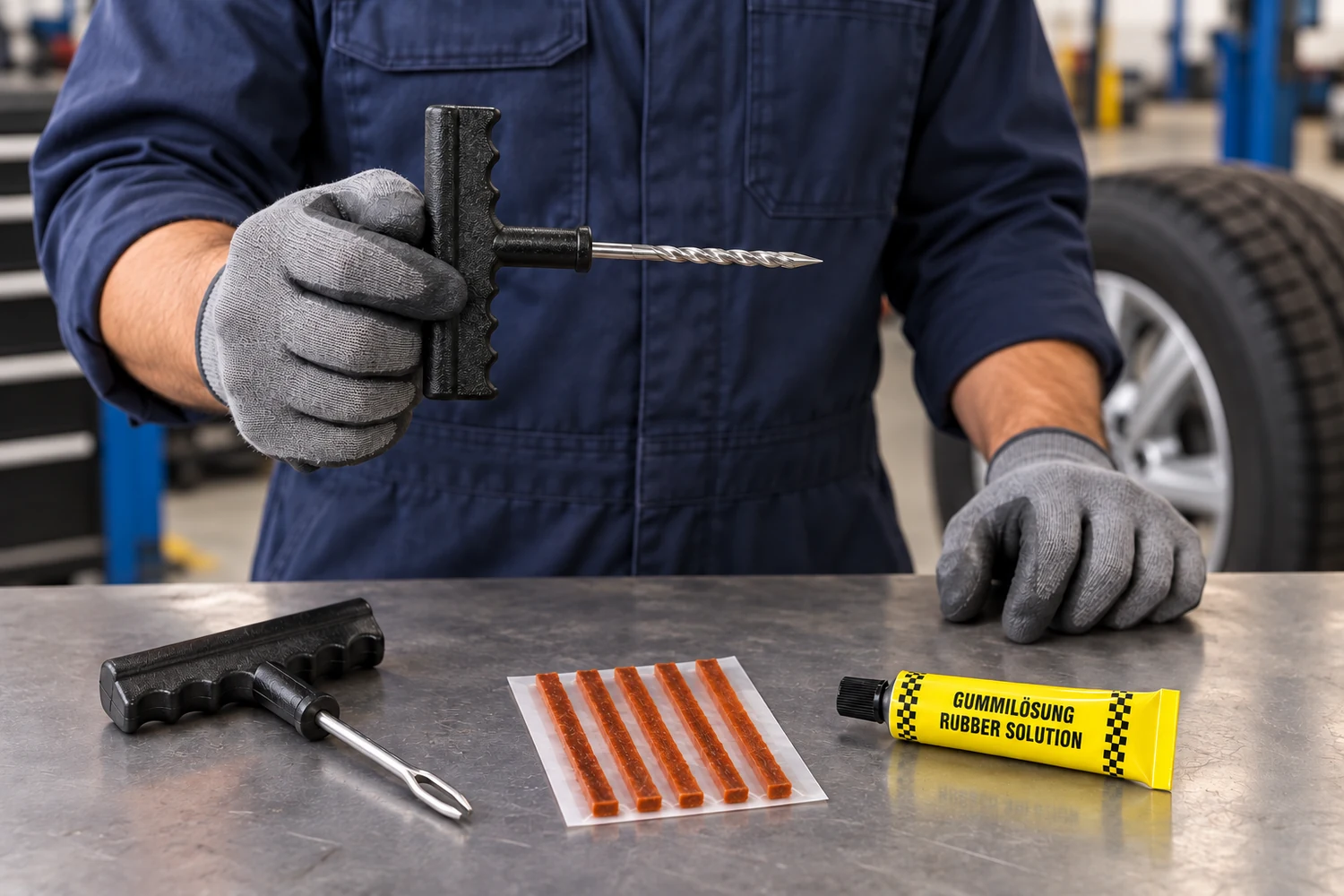
The term complete tire repair kit should be interpreted through the actual bill of materials, not as a promise that every workshop requirement is included. This listing identifies repair tools, rubber strings and rubber solution. It does not provide a purchasing basis for assuming an inflator, inspection equipment or additional repair materials. Record separately any equipment that the intended service process requires, and confirm the order configuration before comparing quotations.
Compare the stated components on consistent terms
A useful comparison begins with what the product page actually states. SSWYAUTO lists steel and rubber materials, a T-handle design, tubeless tires and a plug-insertion method. These are identification details; they are not measured durability results or universal compatibility claims. The table translates the available evidence into questions that a purchasing team can resolve through documentation and sample review.
| Decision factor | Listed evidence | Purchasing check |
|---|---|---|
| Product type | Tubeless tire plug repair tool | Confirm the intended temporary-use role and supplied instructions. |
| Tools | Reamer and insertion tool with T-handles | Compare actual samples and identify each component in the order. |
| Listed materials | Steel and rubber | Request component-specific details where the purchase requires them. |
| Consumables | Rubber strings and rubber solution | Confirm quantities, compatibility and storage information. |
| Supply option | OEM/ODM available | Define the requested scope before relying on a quotation. |
Avoid treating appearance as a specification
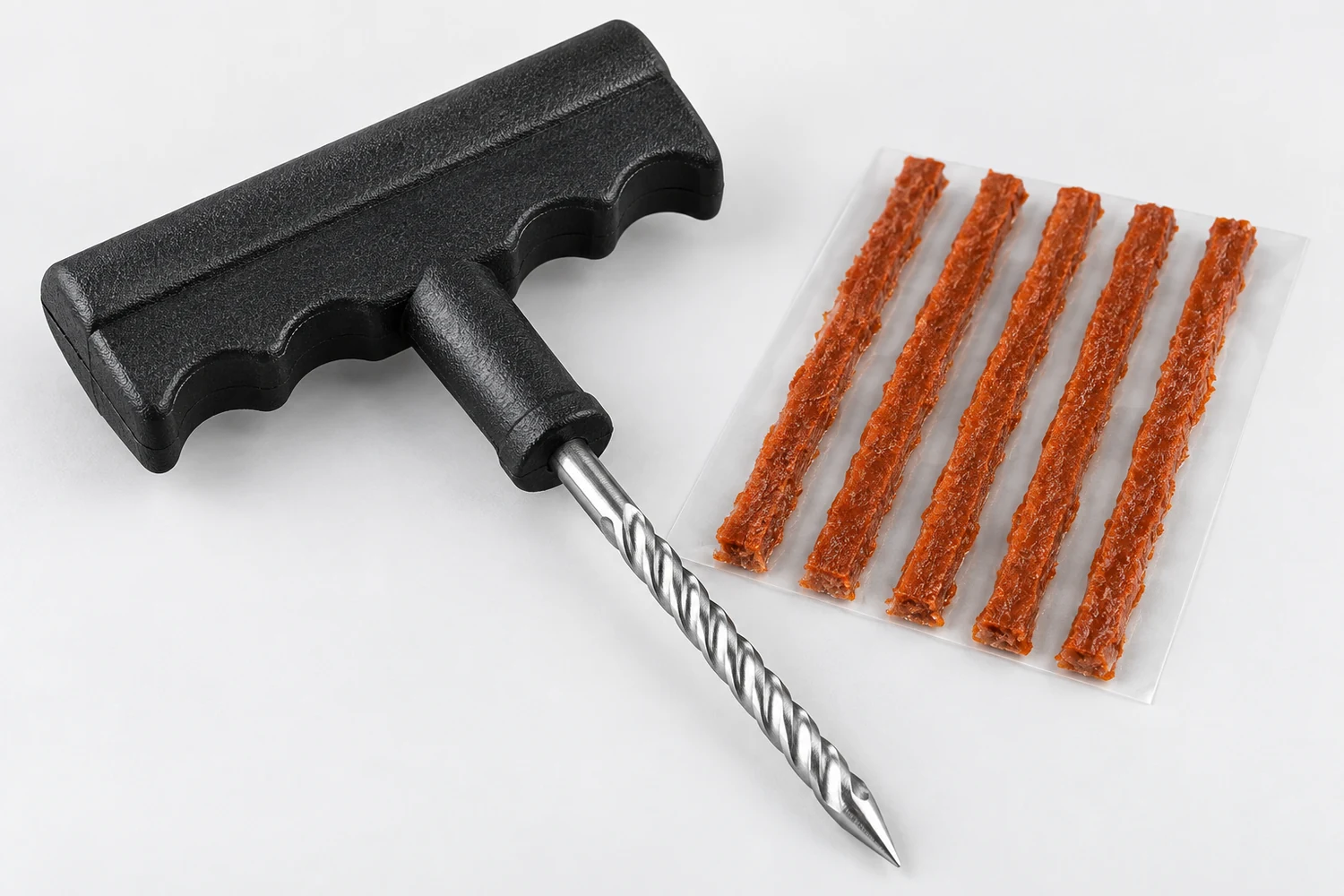
A photograph helps identify the selected configuration, but it cannot establish a dimension, material grade or performance limit that the text does not provide. Similarly, the listed material combination does not specify the composition of every individual part. A buyer requiring precise dimensions or a particular handling characteristic should obtain that information directly and connect it to the sample under review. Missing information is a clarification item, not permission to invent a specification.
Match the stock item to its service setting
The product-specific page names workshops, fleet maintenance and several vehicle categories. Those applications support a relevant purchasing discussion, but they do not settle eligibility for a particular tire. Compare the proposed inventory role with the procedures, staff responsibilities and escalation routes already used by the receiving organization.
Workshop and fleet inventories
For passenger vehicle service, a purchasing brief can identify where emergency stock is held and who checks its condition before issue. In commercial vehicle service, the same brief should identify the intended tire category and the fleet policy that governs roadside intervention. These are operational questions for the buyer; the product listing alone does not establish that the kit satisfies every fleet specification or manufacturer repair requirement.
Motorcycle and distribution channels
A motorcycle service buyer should confirm the applicable tire guidance and the exact intended use before adding the kit to stock. Distributors face a related communication task: descriptions passed to customers should preserve the temporary-use limitation and avoid turning a broad vehicle category into a compatibility guarantee. Keeping the product identifier, contents and instructions together helps downstream teams understand what was ordered and which questions remain application-specific.
Evaluate samples before defining replenishment
Sample review makes a comparison more concrete. Assess the delivered configuration against an agreed description, then document discrepancies before placing a repeat order. This need not imply a performance claim or replace professional testing. Its purpose is to establish that purchasing, receiving and service teams are referring to the same item and the same intended scope.
Use a receiving checklist tied to the order
For tire puncture repair inventory, a clear receiving checklist can separate observable condition from unresolved technical questions. Tool appearance, component presence and readable supplied information can be checked on arrival. Suitability for an individual repair remains a separate professional decision. Retain an approved sample or a documented configuration so that later deliveries can be compared without relying only on a catalog name.
- Identify the item: connect the product page, quotation and selected configuration.
- Check the contents: reconcile tools, strings and solution against the agreed quantities.
- Review condition: note visible damage, missing parts or compromised closures before acceptance.
- Confirm instructions: obtain handling, compatibility and storage information for the supplied materials.
- Record open questions: resolve application limits and replenishment details before routine deployment.
Define an OEM or ODM brief with clear boundaries
The page states OEM/ODM availability, so a buyer can discuss a defined supply requirement with SSWYAUTO. That statement does not establish a particular customization scope, minimum order, delivery schedule or certification. A useful inquiry describes the intended channel, selected contents, required documentation and any proposed changes, then asks which items can be supported in the quoted configuration.
Comparing offers on the same basis is more useful than comparing an undefined kit label. Keep component quantities, packaging requirements and any requested customization separate in the brief. Confirm whether a proposed change affects the instructions or the approved sample. When the specification is settled, retain the agreed version with the purchasing record so repeat orders can refer to a concrete configuration rather than assumptions made during the initial inquiry.
Frequently Asked Questions
Does the kit replace a permanent professional repair?
No. The product page describes temporary emergency use and subsequent professional attention. Purchasing the kit does not establish that a damaged tire is repairable. A qualified assessment and the applicable tire-manufacturer instructions remain necessary before a service decision is made.
Which components are supported by the product listing?
The listing identifies a T-handle reamer, insertion tool, rubber repair strings and rubber solution, with steel and rubber stated as materials. Exact order quantities and any additional contents should be confirmed in the quotation rather than inferred from promotional photographs.
Does the vehicle list prove compatibility?
No. The named applications provide context for an inquiry. They do not establish compatibility for every tire, puncture or operating condition within those categories. Buyers should verify the intended application and service limitations directly before adding a configuration to regular stock.
What should be clarified about the consumables?
Ask for the quantities, compatible-use instructions, storage conditions and relevant identification of the supplied strings and solution. Avoid substituting an unconfirmed material simply because it looks similar. The purchasing record should identify the consumables associated with the selected configuration.
How should an OEM or ODM discussion begin?
Begin with the intended channel and a written description of the desired configuration. Request confirmation of the feasible scope, sample arrangements and documentation. Treat commercial terms and customization details as items to agree directly, rather than capabilities implied by a broad availability statement.
Compare the proposed kit with a defined buying brief
Review the SSWYAUTO product details and discuss the intended application, exact contents and OEM/ODM scope. A complete tire repair kit is easier to evaluate when the sample, written specification and temporary-use instructions agree. Use that confirmed configuration as the basis for the next purchasing decision.