

TPMS Sensors : Everything You Need to Know
During driving, abnormal tire pressure is the most easily overlooked but dangerous driving hazard. Tires with insufficient air, high temperature bulges, and chronic air leaks can cause the vehicle to deviate, fuel consumption to soar, abnormal tire wear, and in severe cases, high-speed tire blowouts, endangering driving safety. The core component of the tire pressure monitoring system (TPMS), the tire pressure sensor, is the "invisible sentinel" that safeguards tire safety.
Many car owners only know that there is a tire pressure alarm function on the car, but they have no understanding of the working principle, service life, fault causes, and replacement misconceptions of the sensor. In daily use, problems such as false alarms of tire pressure lights, sensor malfunctions, failed matching after tire replacement, and frequent air leaks after replacement are common, mostly due to insufficient understanding of sensors. Today we will comprehensively disassemble the practical knowledge of tire pressure monitoring sensors to help car owners thoroughly understand this safety configuration.
1 What is a tire pressure sensor? The core function is clear at a glance
The tire pressure sensor is the core acquisition hardware of the tire pressure monitoring system, mainly equipped with high-precision pressure and temperature sensing chips, coupled with wireless transmission modules, which can monitor the internal pressure and temperature data of four tires in real-time 24 hours a day. When the vehicle is in motion or stationary, sensors will continuously collect data and transmit it to the onboard control system through wireless radio frequency signals, ultimately displaying real-time tire pressure values on the dashboard.
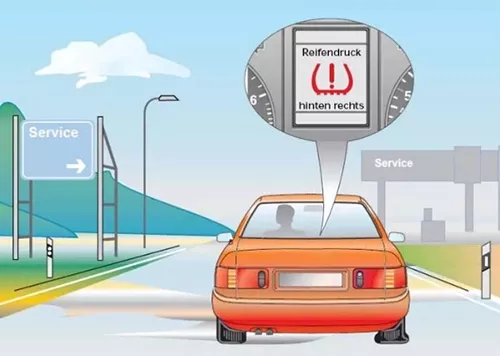
When there are problems such as tire leakage, high or low tire pressure, or abnormal tire temperature rise, the system will immediately trigger light and text alarms to remind the car owner to handle them in a timely manner. It can not only avoid the risk of tire blowouts, but also help the tires maintain standard working conditions, reduce abnormal wear and tear, and lower driving fuel consumption. It is a core automotive accessory that balances safety and maintenance costs.
2. There are two types of tire pressure sensors on the market, with significant differences
At present, the tire pressure monitoring systems for household passenger cars are mainly divided into two types: indirect and direct. The corresponding sensor work logic, accuracy, and practicality have significant differences, which is also a knowledge point that car owners often confuse.
(1) Indirect tire pressure monitoring (without physical sensors)
Indirect tire pressure monitoring does not have independent tire sensors and relies on the original ABS wheel speed sensor of the vehicle. The core principle is that when the tire pressure is insufficient, the tire surface deforms and the diameter becomes smaller, and the wheel speed will be significantly higher than other normal tires. The vehicle ECU determines the abnormal tire pressure and alarms based on the speed difference.
This configuration is more common in entry-level models, with low cost and no maintenance required, but its shortcomings are very obvious: it cannot display specific tire pressure values and can only provide general alarms; Minor chronic air leakage and simultaneous loss of air in all four wheels cannot be identified; During high-speed driving and bumpy road conditions, false alarms are prone to occur and monitoring accuracy is extremely poor.
(2) Direct tire pressure monitoring (with independent sensor)
At present, mainstream mid to high end models and upgraded rear mounted models all adopt direct tire pressure monitoring, with each wheel equipped with an independent sensor, which can be installed in two forms: internal and external.
The built-in sensor is installed at the valve position inside the tire, fitting closely to the wheel rim. The data accuracy is extremely high, and the error can be controlled within ± 0.1Bar. At the same time, it can monitor tire temperature, with strong anti-interference ability and long service life, which does not affect vehicle driving and appearance. It is currently the most mainstream choice. The external sensor is directly fixed on the outside of the valve, which is easy to install and does not require tire removal. However, it is prone to damage and theft due to bumps, and its sealing and stability are far inferior to the built-in model.
3. Common faults of tire pressure sensors, no need for blind maintenance
In daily use, if the tire pressure warning light lights up and the dashboard displays sensor faults, it may not necessarily be due to damaged parts, but mostly common small problems. Car owners can simply self check to avoid wasting money on repairs.
(1) Frequent false alarms and fluctuating values
The large temperature difference between day and night, rapid increase in tire temperature during high-speed driving, and alternating cold and hot washing can all cause short-term fluctuations in tire pressure, triggering temporary alarms, which are normal phenomena. After allowing the vehicle to stand still for half an hour, restart the system and restore stable values, no maintenance is required.
(2) Single round no data, sensor lost contact
It is highly likely that the sensor battery is depleted, or the sensor is damaged due to collision or violent handling during tire disassembly and assembly. The built-in sensor is powered by an independent battery, and the battery cannot be replaced separately. After the battery is depleted, the sensor needs to be replaced as a whole.
(3) The tire pressure value remains unchanged for a long time
Under normal driving conditions, tire pressure will slightly fluctuate with tire temperature. If the value of a certain tire remains fixed all year round, it is likely that the sensor signal is stuck or malfunctioning, and the data stops updating. It is necessary to go to the store for testing, calibration, or replacement of parts.
4.Sensor lifespan and replacement standards, don't wait for faults before replacing
Many car owners mistakenly believe that tire pressure sensors are maintenance free for life, but in fact, they are consumables with a fixed service life, and excessive use can easily cause safety hazards.
The normal service life of the original built-in tire pressure sensor is 5-6 years, corresponding to a driving mileage of about 80000 to 100000 kilometers. Even if there is no malfunction during the period and the tire pressure display is normal, it is recommended to replace it in bulk after 6 years of use. The sensor battery is enclosed and cannot be charged or replaced. Once the battery is depleted, the sensor will be scrapped and become ineffective.
At the same time, it is recommended that the technician check the sensor status every time a new tire is replaced, sidewall wounds are repaired, or the wheel hub is disassembled. Sensors that are aging, loose, or have damaged sealing rings should be replaced synchronously as much as possible to avoid the problem of chronic air leakage and monitoring failure when new tires are paired with old sensors.
5. Maintenance and disassembly to avoid pitfalls, most faults are caused by human factors
The failure rate of tire pressure sensors themselves is extremely low. 90% of daily damage and malfunction problems are caused by improper disassembly and maintenance negligence. Car owners must remember these pit avoidance techniques.
(1) It is strictly prohibited to engage in violent operations when disassembling and assembling tires
The built-in sensor is tightly attached to the root of the valve, and its position is fragile. Many maintenance personnel do not pay attention to the angle when disassembling the tire, which easily scratches and squeezes the sensor, causing the shell to crack and the internal chip to be damaged, resulting in abnormal signals and slow air leakage in the later stage. Before disassembling and assembling tires, it is necessary to inform the master in advance that the vehicle is equipped with a tire pressure sensor and operate it in a standardized manner.
(2) Eliminate the mixing of three no sensors
Low priced miscellaneous sensors on the market have poor chip accuracy and inadequate waterproof and seismic performance. After long-term high-speed driving and high temperature exposure, they are prone to signal interruption, seal failure, and even water damage, posing great safety hazards. When replacing, priority should be given to choosing original factory compatible accessories or legitimate brand products to ensure accurate data and stable use.
(3) Matching calibration must be performed after replacement
After replacing, swapping, and repairing the tire pressure sensor, it cannot be directly driven on the road and requires professional equipment for coding matching, reset calibration. Unfinished matching can result in dashboard failure to report data, data confusion, and abnormal alarms. At the same time, wheel dynamic balancing must be synchronized to avoid steering wheel shaking during high-speed driving.
(4) Avoid two major misconceptions in daily maintenance
Do not direct the high-pressure water gun towards the tire pressure monitoring sensor at close range, as high-pressure water flow can damage the sealing gasket and cause water ingress and air leakage; At the same time, do not disassemble or manipulate the sensor at will. Use a damp cloth to gently wipe the dust in the gaps between the wheels for daily car washing.
Tire pressure sensors may seem like inconspicuous car accessories, but they are the core safety configuration that ensures tire stability and avoids the risk of tire blowouts. Most car owners neglect its maintenance and replacement, and only regret it when the alarm fails, tire leaks, or driving hazards arise.
Briefly summarize the core points: prioritize identifying direct built-in sensors, replace them regularly for about 6 years, prioritize tire protection during disassembly and assembly, reject inferior parts, and promptly match and calibrate after replacement. Mastering these basic knowledge can enable the tire pressure monitoring system to work stably for a long time, comprehensively safeguard daily driving safety, reduce abnormal tire wear, and lower vehicle maintenance costs.