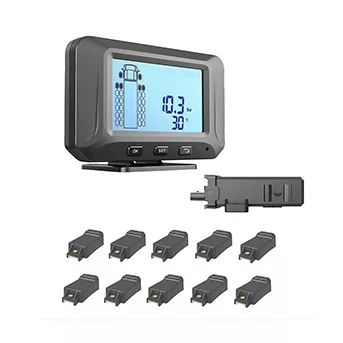
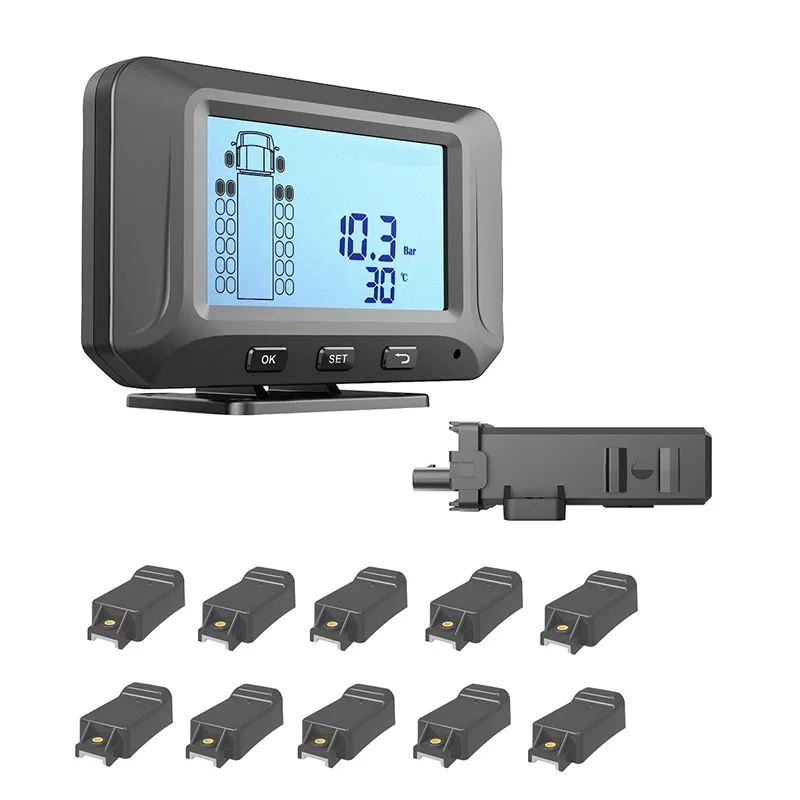
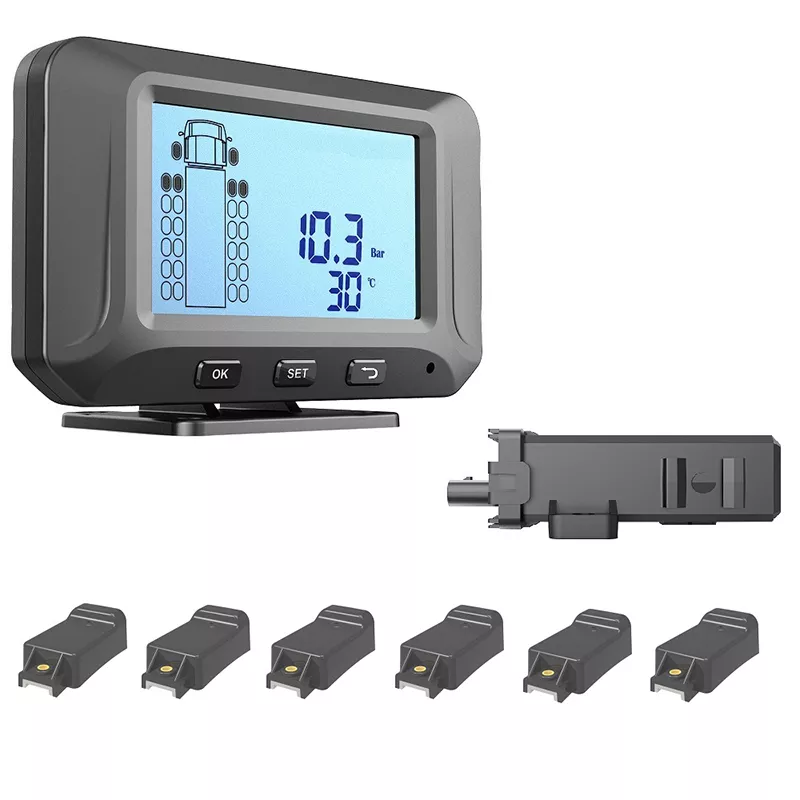
TN200 Truck TPMS System – Wireless Tire Pressure Monitoring System for Heavy Duty Vehicles
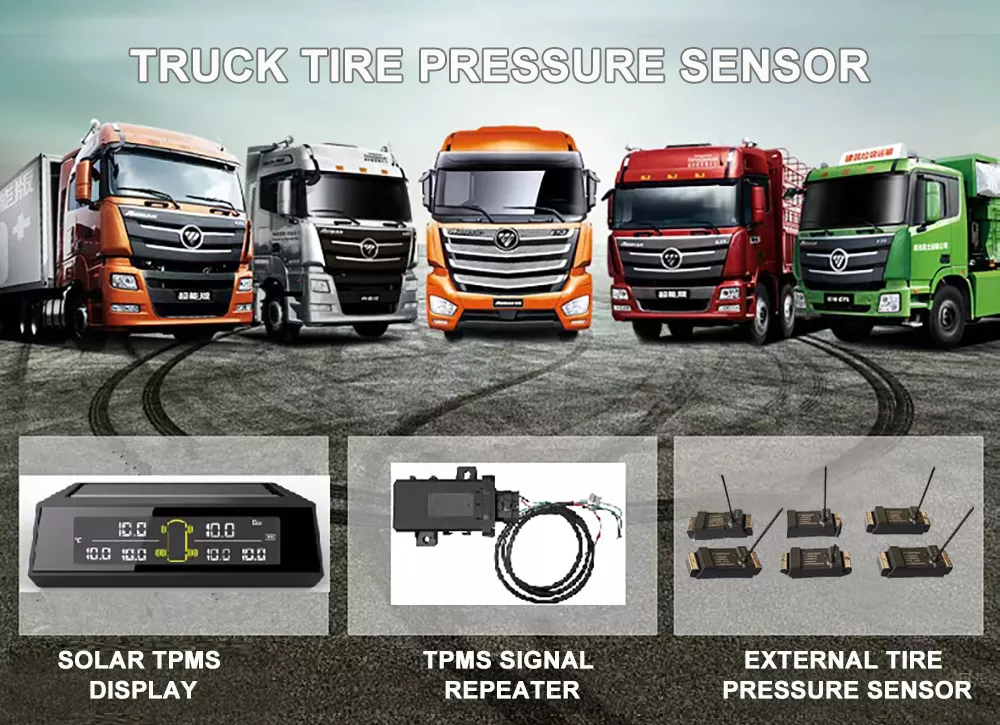
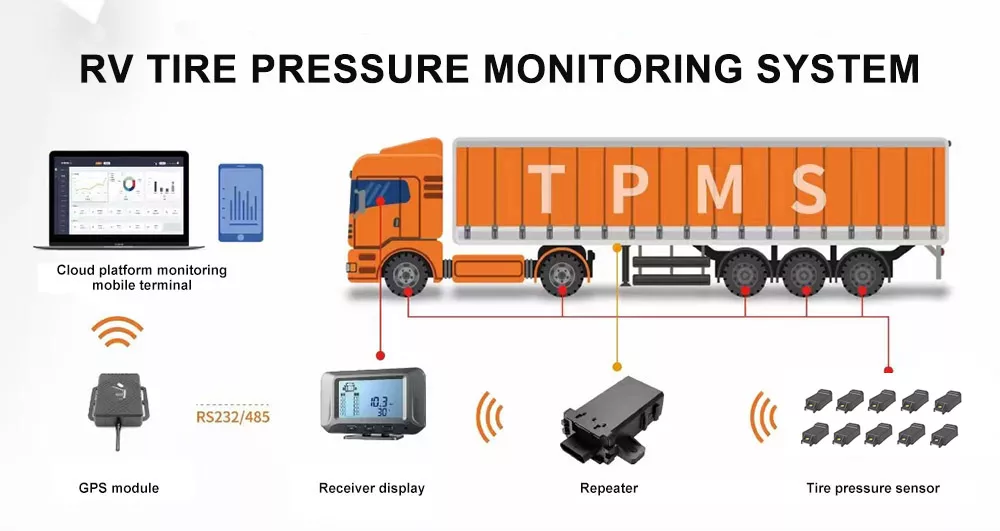
TN200 Truck TPMS System of sensors, repeaters, and a receiver, designed to monitor tire pressure and temperature in real time. The sensors collect pressure and temperature data from the tires and transmit it wirelessly via radio frequency to the repeater, which then sends it to the receiver. The receiver processes and displays the data on the screen. When the tire pressure or temperature exceeds or falls below the preset alarm thresholds, the receiver automatically triggers an alarm to alert the user to the tire status. The system enhances vehicle comfort, prevents tire blowouts, reduces fuel consumption, minimizes tire wear, and indirectly improves power performance.
Technical Product Data
CAN-BUS Receiver
| Working voltage |
DC 12V~DC 32V Vehicle-mounted power supply |
| The machine current |
﹤50mA |
| Receive frequency |
433.92MHz±50KHz |
| Receiving sensitivity |
﹤-105dBm |
| Working temperature |
-40℃~85℃ |
| Data transmission |
CAN-BUS |
| Baud rate of the high-frequency data |
10 Kbps |
| Storage temperature |
It is recommended to normal temperature |
| High-frequency data encoding mode |
Manchester |
| With its own connector male terminal model |
TE 1-1670919-1 |
| Model of master connector required by the manufacturer |
TE 1-1670919-1 |
Internal sensor
| Battery model |
CR2450(550mAh) |
| RF frequency |
433.92 MHz±38 KHz |
| Standby current |
﹤0.7 uA |
| Emission current |
﹤10 mA |
| High frequency emission power |
﹤8 dbm(50Ω) |
| High frequency modulation mode |
FSK |
| Low frequency reception frequency |
125 KHz±5 KHz |
| Low frequency demodulation method |
ASK |
| Pressure measurement range |
0-13 bar |
| Pressure resolution |
2.75 KPa |
| Pressure measurement accuracy |
±0.2 bar(0℃~70℃)
±0.3 bar(-20℃~85℃)
±0.48 bar(-40℃~125℃)
|
| Temperature measurement range |
-40℃~125℃ |
| Temperature resolution |
1℃ |
| Temperature measurement accuracy |
±3℃(0℃~70℃) |
| Operating temperature range |
-34℃~125℃ |
| Storage temperature range |
-40℃~125℃(Storage at room temperature) |
| Battery life |
More than 5 years |
| Weight |
43.4±1g |
Repeater
| Working voltage: |
DC 9 V ~ 36 V |
| RF signal transmitting center frequency: |
433.92 MHz |
| RF emission signal modulation mode: |
FSK |
| RF emission signal encoding mode: |
Manchester |
| RF emission signal wave rate: |
5K bps |
| RF signal transmitting power: |
﹤ 10 dbm |
| RF signal reception sensitivity: |
﹤-105 dbm |
| Maximum operating current: |
﹤ 50 mA |
| Frequency of the RF signal receiving center: |
433.92 MHz |
| Working temperature: |
-40℃ ~ 85℃ |
Product functional characteristics
CAN-BUS Receiver
- SJ1939 communication platform, using the CAN-BUS transmission mode
- It can support 2 to 22 tire air pressure, temperature measurement and CAN-BUS data transmission
- Two-way communication, with ID learning, ID query, air pressure, temperature and its own judgment function
- Front installation technical standard, which can connect all on-board equipment with CAN interface, such as instrument, GPS, BCM, ABS。
Internal sensor
- The high-frequency transmission method adopts FSK modulation signal, and the low-frequency adopts ASK modulation signal
- Fully imported vehicle grade materials with long service life, high stability, and strong anti-interference ability
- Simultaneously measuring and monitoring air pressure and temperature, with self checking and tire leakage monitoring functions
- Adopting IP67 protection level
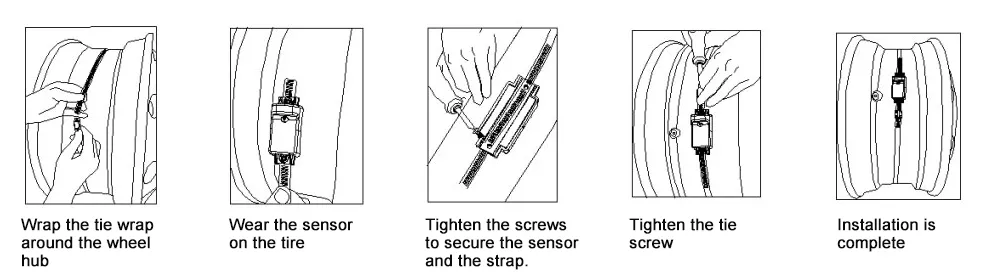
- Simple installation
Repeater
- Transfer data, data transmission between sensors and receivers
- Increase the signal strength when the distance is far and the signal weakens to ensure the reliability of the transferred signal reception
- Full thread fixed mode, using IPX6 waterproof testing standard
- Internally integrated high-frequency transmission and reception functions, high-sensitivity data reception
Product Advantages
Truck TPMS (Tire Pressure Monitoring System) is a smart tire safety management system designed specifically for trucks, trailers, buses, and heavy-duty commercial vehicles. By monitoring tire pressure and temperature in real time, it helps drivers and fleet managers reduce the risk of tire failure while enhancing transport safety and operational efficiency.
Real-time tire pressure monitoring
Truck TPMS monitors the pressure of each tire in real time and provides timely alerts to the driver, helping to prevent safety incidents—such as blowouts or loss of vehicle control—caused by abnormal tire pressure.
Reduce blowout risk
Helps drivers detect potential issues in advance, effectively reducing the likelihood of tire blowouts.
Extend tire lifespan
Truck TPMS helps maintain tires in optimal condition, thereby extending tire life, reducing the frequency of tire replacements, and lowering operating costs.
Save fuel
Insufficient tire pressure increases rolling resistance, causing the engine to consume more fuel. Maintaining proper pressure over the long term can significantly reduce fuel costs.
Multi-tire management
When used with a signal repeater, stable data transmission is maintained even for large trailers.
Smart fleet management
Real-time data monitoring enables proactive scheduling of tire maintenance, enhances transport safety management, and reduces manual inspection costs.
Suitable for Vehicle Service and Aftermarket Supply
This product is suitable for distributors, tire repair workshops, auto service centers and automotive aftermarket suppliers that need stable wheel balancing products in regular box packing.
Truck
Tire Repair WorkshopsAuto Service CentersWheel Balancing ApplicationsAutomotive Aftermarket Distribution
Standard Box Packing with Custom Branding Support
8 Pieces / Set
Regular packing unit for wholesale, workshop and distributor replenishment.
OEM Label & Carton
Custom labels, carton marks and brand packaging can be arranged for market-specific orders.
Original factory support Specification Support
Adapt to original factory models
TW303 Truck TPMS System replace
01Disassemble the old sensor valve assembly
Separate the old sensor and valve, clean the rust and old sealing ring residue in the wheel hub valve installation hole.
02Install a brand new sensor
Fix the tire pressure sensor buckle on the valve base, confirm that the air passage is completely aligned without gaps, and adjust the sensor angle to avoid rubbing against the tire wall.
03Dynamic Balance+TPMS Matching Reset
Perform tire dynamic balancing on the wheel hub and install balance weights to eliminate shaking.
Tip: The replacement of the sensor must be synchronized with the replacement of the matching valve sealing ring to avoid slow air release in the later stage; The metal valve should not be tightened with excessive force on the nut, as the sliding wire will directly scrap the wheel hub mounting hole.
Controlled details from production to finished product packaging
01Incoming Component Inspection
100% inspection for sensor circuit boards, aluminum valve stems, FKM seals and batteries. Valve stem diameter, base clearance and threads are gauged to avoid assembly jams or tilting.
02Assembly & Full Performance Testing
Complete air tightness test under simulated tire pressure to eliminate air leakage. 433MHz RF signal and ID code verification removes units with weak signals or invalid codes.
03Appearance & Structural Durability Check
Double-check thread and seal assembly for misalignment, missing seals or loose clips. Defective items are scrapped; qualified ones proceed to packaging.
04Finished Product Sorting & Standard Packaging
Sort single or 4-piece sets, verify part number 5Q0907275B and vehicle labels. Packaging inspection records are kept for full batch traceability.
Review Screenshots
Frequently Asked Questions
What vehicles are compatible with TN200 TPMS?
TN200 is designed for trucks, buses, trailers, RVs, and other heavy-duty commercial vehicles.
Does TN200 require removing the tire during installation?
Yes. The sensor needs to detect the internal air pressure of the tire.
What does the TN200 TPMS monitor?
The system monitors tire pressure and tire temperature in real time and provides warning alerts when abnormal conditions occur.
Why is a signal repeater needed for trucks?
Large trucks and trailers have longer distances between tires and the cabin. The signal repeater improves communication stability between sensors and the display.