

How to select a rectangular tire repair patch for radial tires?
Selecting a rectangular tire repair patch requires checking tire construction, repair eligibility, reinforcement and the repair system before ordering workshop stock.
Start with tire construction and repair eligibility
A radial tire repair patch should be selected for a radial tire within an appropriate repair system. This product is identified as a radial repair unit, so its rectangular shape must not be treated as evidence that it also suits bias construction. A buyer needs a clear match between the product description, the tire being serviced and the instructions available to the technician.
Inspect the tire before choosing stock for a job
General puncture-repair guidance from the U.S. Tire Manufacturers Association calls for removing the tire from the wheel and inspecting it before determining whether repair is appropriate. A complete puncture repair addresses both the injury channel and the innerliner seal. A patch by itself does not complete that process. Tire manufacturer policies and the relevant repair procedure remain decisive.
Separate a listed application from a repair approval
The product page lists cars, SUVs, trucks and buses, and describes tubeless and tube radial tire applications. Those categories identify where the product may be evaluated. They do not approve every tire, injury location or damage condition within those categories. Commercial vehicle service may require a different assessment from passenger tire work, even when the stock description uses similar language.
Read the specifications as purchasing criteria
The useful specifications describe the repair unit and its listed process options. Each purchasing question should refer to one of those dimensions. A material description does not establish a load rating, and a packaging option does not establish the contents of an individual box. Keeping those distinctions explicit helps a buyer obtain a precise quotation.
| Decision factor | Verified product information | Check before ordering |
|---|---|---|
| Repair unit | Rectangular radial repair patch | Confirm the intended radial repair procedure. |
| Construction | Rubber and reinforced fabric | Request the applicable handling and installation instructions. |
| Tire category | Tubeless and tube radial tires | Confirm the exact tire and repair application. |
| Repair process | Cold or hot vulcanization listed | Confirm compatible materials and the selected process. |
| Packaging | Box or customized packaging | Agree the variant, contents and pack identification. |
Confirm dimensions with their units
The listing presents several size combinations, but the available page text does not explicitly attach units to them. Procurement records should therefore use dimensions confirmed for the selected variant, with the unit stated. Neither the photograph nor an unlabelled size entry should be used to infer the maximum repairable injury. Those are separate questions requiring the appropriate technical instructions.
Treat reinforcement as a construction feature
The listed reinforced fabric is a product construction detail. It does not by itself quantify strength, restored casing performance or suitability for a particular load. A rectangular tire repair patch can be compared with the required repair-unit description, but the comparison still needs the documented application and process. Unsupported performance promises add little value to a purchasing specification.
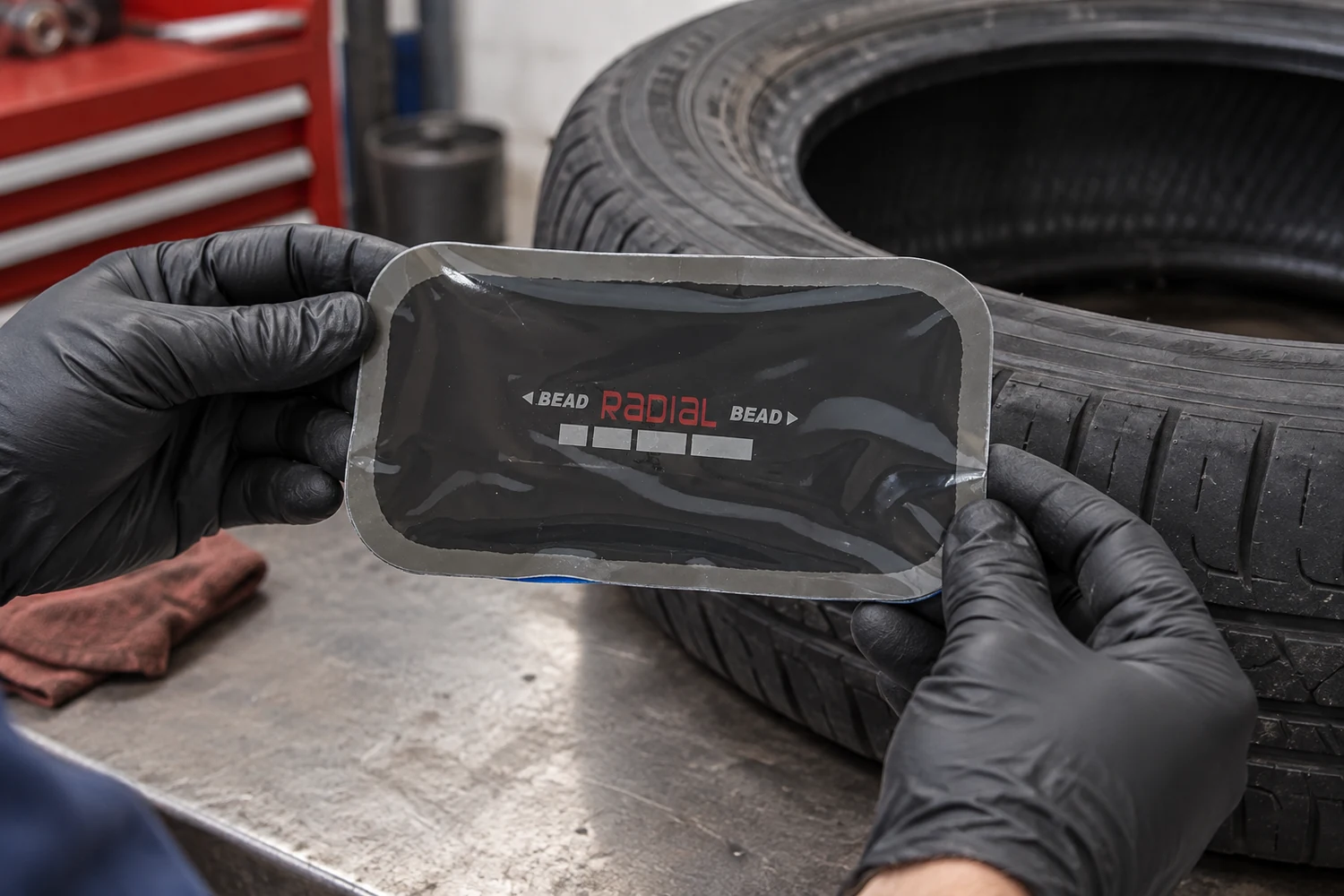
Match the unit to a defined workshop process
The page lists both cold and hot vulcanization. This should prompt a process check before purchase, because naming two methods does not establish that every cement, preparation material or workshop setting can be used with the unit. The buyer should request instructions for the intended method and keep them available with the relevant stock.
Confirm the repair materials together
Repair materials should be selected as a compatible set under the applicable instructions. The patch listing does not establish that cement, injury-channel material or tools are included. A quotation should distinguish the repair unit from any additional consumables needed by the chosen procedure. This prevents a purchasing description from being mistaken for a complete repair kit.
Keep inspection and installation decisions distinct
The workshop decides whether a tire can be repaired before selecting and applying a unit. Procurement supports that decision by supplying identifiable stock and the correct documentation. It cannot turn an unsuitable injury into a repairable one. Product photographs can help with receiving inspection, while orientation, surface preparation and installation must follow the instructions for the actual repair system.
Build a selection checklist around the intended use
For passenger vehicle service, the purchasing brief can identify the radial tire categories normally handled and the repair procedures the workshop uses. Fleet and distributor buyers can describe their own service mix just as clearly. The purpose is to make the inquiry specific enough to check the product, without assuming one variant covers every service situation.
- Identify the radial tire category and obtain the applicable repair eligibility criteria.
- Confirm the patch variant, dimensions and measurement units in the quotation.
- Match the listed vulcanization option to the intended repair system and materials.
- Request the relevant installation, handling and storage instructions.
- Agree package contents and item identification before the order is released.
A receiving check can then compare the delivered item with the agreed variant and packaging description. If a label, dimension or instruction differs from the purchasing record, the discrepancy should be resolved before the item enters workshop stock. A photograph can support that comparison, but it cannot replace a technical application check or establish a specification omitted from the order.
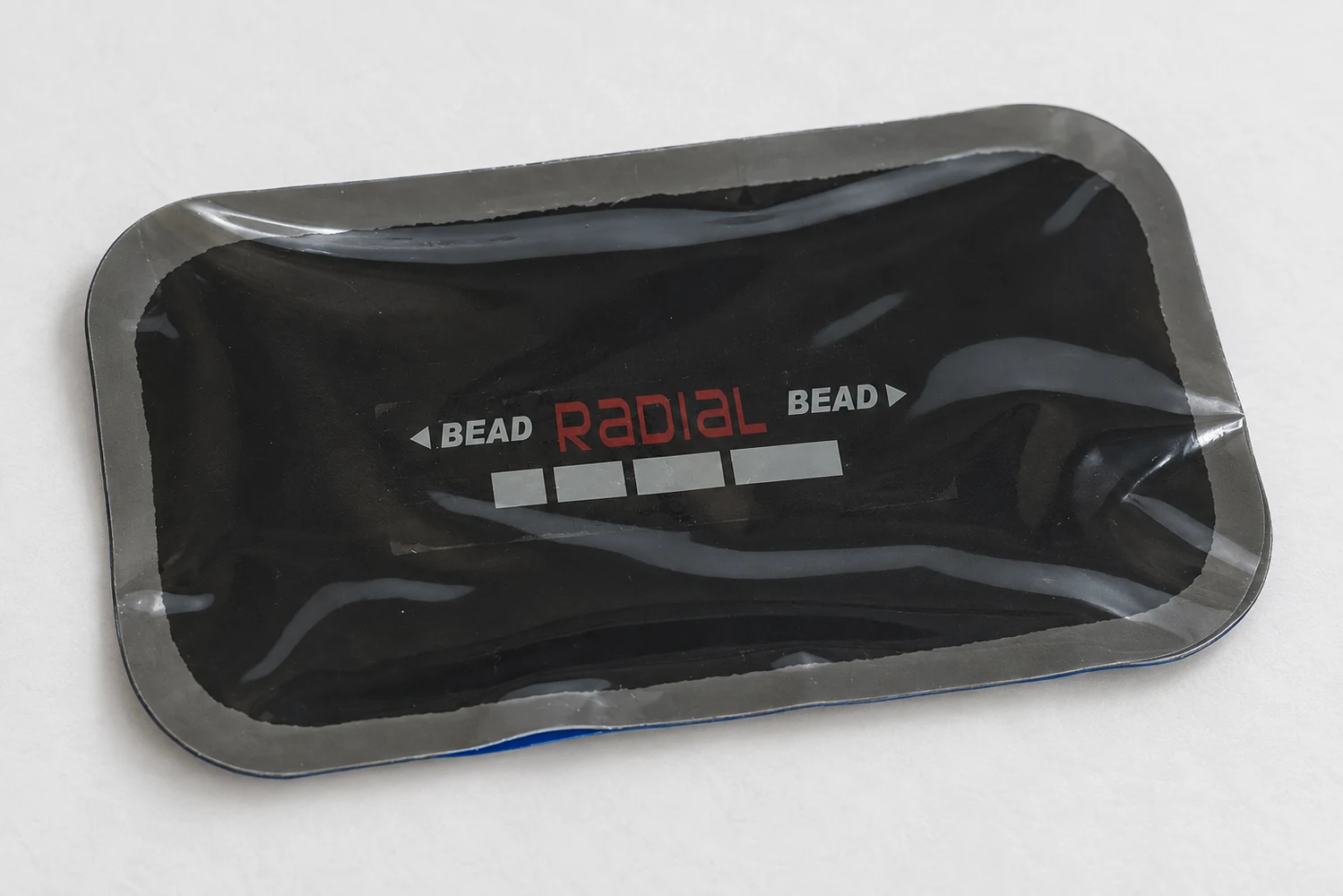
Make distributor and workshop inquiries specific
For tire shop and workshop supply, the SSWYAUTO listing provides box and customized packaging options. A buyer can use that information to discuss how a confirmed variant should be supplied and identified. It does not establish an order quantity, delivery commitment or private-label capability, so those details should be confirmed separately where relevant.
An effective inquiry includes the tire category, the required repair-unit variant and the process used by the receiving workshop. It should also request the package contents and the documents needed to check the item on arrival. A clear record of those answers is more useful than a broad request for a universal patch, because it preserves the basis on which the item was evaluated.
Frequently Asked Questions
Is this product intended for radial or bias tires?
The SSWYAUTO product is described as a radial repair unit. Its rectangular form does not establish suitability for bias tires. Buyers should match the construction and the specific repair procedure before choosing a variant.
Does the patch alone complete a puncture repair?
No. General tire-industry guidance requires addressing the injury channel as well as sealing the innerliner. Repair eligibility, tire manufacturer policies and the instructions for the chosen system determine the complete procedure.
Are the listed dimensions enough to select a variant?
Dimensions need explicit units and a confirmed association with the ordered variant. The size entries on this page should be clarified before purchase. Patch dimensions must not be treated as the permissible dimensions of an injury.
Can buyers choose cold or hot vulcanization?
Both methods are listed on the product page. Buyers should confirm the instructions, compatible materials and exact variant for the intended method. The listing does not make different cements or preparation procedures interchangeable.
What should a packaging inquiry include?
The page lists box or customized packaging. An inquiry should identify the selected variant and ask for package contents and item identification. Any additional commercial requirements need explicit confirmation in the quotation.
Check the variant before preparing an order
Buyers evaluating a rectangular tire repair patch can review the SSWYAUTO product details and request confirmation of dimensions, the intended repair system and packaging. Those answers provide the basis for a specific workshop or distributor purchasing decision.