

How to Choose the Right Wheel Weights for Your Vehicles
Choosing the correct wheel weights is an important step in maintaining vehicle safety, driving comfort, and tire performance. Although wheel weights are small components installed on the wheel rim, they play a critical role in correcting wheel imbalance, reducing vibration, and extending tire life.
For vehicle owners, tire shops, and automotive distributors, selecting the right type of wheel weight depends on several factors, including wheel design, vehicle application, installation method, and material requirements.
What Are Wheel Weights and Why Are They Important?
Wheel weights are used to balance the weight distribution of a wheel and tire assembly. During tire installation or replacement, uneven weight distribution can cause wheel imbalance, resulting in steering vibration, uneven tire wear, and reduced driving comfort.
A properly balanced wheel helps:
- Improve driving stability at high speeds
- Reduce steering wheel vibration
- Extend tire and suspension component life
Provide a smoother and safer driving experience
For professional tire service centers and automotive workshops, choosing high-quality wheel weights ensures reliable balancing performance and customer satisfaction.
Different Types of Wheel Weights
Wheel weights are available in different designs and materials to meet various vehicle requirements. The most common types include adhesive wheel weights and clip-on wheel weights.
Adhesive Wheel Weights
Adhesive wheel weights, also known as stick-on wheel weights or tape weights, are widely used on modern vehicles, especially those equipped with aluminum alloy wheels.
These weights are attached to the inner surface of the wheel using strong adhesive tape, providing a clean appearance without damaging the rim.
Advantages:
- Suitable for aluminum alloy wheels
- Provides a professional appearance
- Available in steel, zinc, and other materials
- Easy installation and removal
- Ideal for passenger cars and aftermarket applications
Adhesive wheel weights are commonly used by automotive manufacturers, tire dealers, and wheel service professionals.

Clip On Wheel Weights
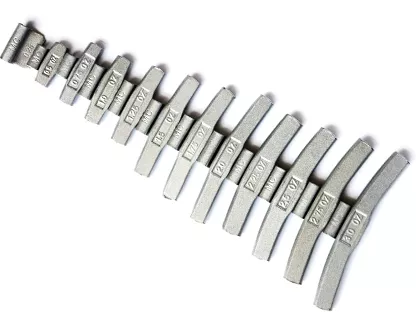
Clip on wheel weights are installed by attaching a metal clip to the edge of the wheel rim. They are commonly used on steel wheels and commercial vehicles.
Advantages:
- Strong mechanical attachment
- Suitable for steel rims
- Available for different rim flange designs
- Reliable performance in demanding conditions
Clip on wheel weights are widely used for trucks, buses, commercial vehicles, and some passenger cars.
Choosing the Right Wheel Weight Material
Wheel weights are manufactured using different materials, each with its own characteristics.
Steel Wheel Weights
Steel wheel weights are a popular choice due to their durability, cost efficiency, and environmental advantages compared with traditional lead weights.
Benefits include:
- High strength and durability
- Cost-effective solution
- Suitable for large-scale automotive applications
- Environmentally friendly alternative
Zinc Wheel Weights
Zinc wheel weights offer good corrosion resistance and are commonly used where environmental regulations limit the use of lead materials.
Benefits include:
- Excellent corrosion resistance
- Suitable for various wheel applications
- Meets many international environmental requirements
Lead Wheel Weights
Lead wheel weights have been used in the automotive industry for many years because of their high density and compact size.
However, some markets have introduced restrictions on lead products due to environmental concerns, leading many manufacturers and customers to choose steel or zinc alternatives.
How to Select Wheel Weights for Different Vehicles
Passenger Cars
Most passenger cars with aluminum alloy wheels use adhesive wheel weights because they provide a clean appearance and secure attachment.
Recommended choice:
- Adhesive steel wheel weights
- Adhesive zinc wheel weights
Trucks and Commercial Vehicles
Heavy-duty vehicles require wheel weights that can withstand higher loads and vibration.
Recommended choice:
- Clip-on wheel weights
- Heavy-duty steel wheel weights
Performance and Luxury Vehicles
High-end vehicles often require precise balancing solutions with attention to appearance.
Recommended choice:
- Low-profile adhesive wheel weights
- Premium zinc or steel adhesive weights
Key Factors to Consider Before Buying Wheel Weights
When purchasing wheel weights, consider the following points:
1. Wheel Type
Different wheels require different installation methods. Always match the wheel weight design with the rim structure.
2. Vehicle Application
Passenger cars, trucks, buses, and specialty vehicles may require different weight specifications.
3. Material Requirements
Consider local regulations, environmental requirements, and performance expectations when choosing between steel, zinc, and lead materials.
4. Manufacturing Quality
Reliable wheel weights should have:
- Accurate weight tolerance
- Strong adhesive performance
- Durable surface treatment
- Stable production quality
For distributors and OEM customers, working with an experienced wheel weight manufacturer helps ensure consistent product quality and supply stability.
Working with a Professional Wheel Weight Manufacturer
A trusted wheel weight supplier can provide a complete range of balancing solutions, including adhesive wheel weights, clip-on wheel weights, steel wheel weights, zinc wheel weights, and customized OEM products.
Professional manufacturers can support:
- Customized packaging
- Different weight specifications
- OEM production
- Quality inspection
- Global shipment services
Choosing the right wheel weights is not only about balancing a tire; it is about improving vehicle safety, performance, and customer satisfaction.
With the right product selection and a reliable manufacturing partner, automotive businesses can provide better wheel service solutions for their customers worldwide.